
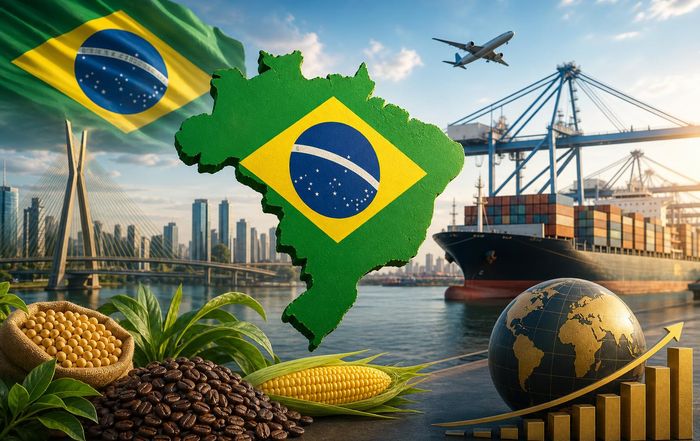
Brazil's Economy and Global Trade Role
Brazil stands at a pivotal juncture, reshaping its economic model and global trade posture after a decade marked by political volatility, commodity supercycles, and the disruptive shock of the pandemic. As the largest economy in Latin America and a key player among emerging markets, Brazil's trajectory is of central interest to global investors, multinational corporations, policymakers, and the readership of FinancialDailys.com, whose focus spans finance, markets, investing, and the wider world of international business. Understanding Brazil's evolving role in global trade now requires a holistic view that integrates macroeconomic stabilization, structural reforms, sectoral shifts, and the country's positioning within an increasingly fragmented yet deeply interconnected global economy.
Macroeconomic Landscape: Stabilization After Volatility
In 2026, Brazil's macroeconomic environment reflects both the scars of past crises and the fruits of a gradual, if uneven, reform process. After experiencing severe recessions in the mid-2010s, a turbulent political cycle, and the pandemic shock, the country has moved toward a more predictable policy framework, even if challenges remain. Inflation, which had spiked amid supply chain disruptions and commodity price swings, has been brought closer to target through a combination of tighter monetary policy by the Banco Central do Brasil and a cautious, though contested, fiscal stance by the federal government. Readers tracking global macro trends through resources such as the International Monetary Fund and World Bank will recognize Brazil's case as emblematic of middle-income economies that have had to balance inflation control with growth recovery in a post-pandemic world.
The central bank's formal independence, legislated earlier in the decade, has strengthened institutional credibility and has been particularly relevant for international investors monitoring Brazil through emerging market indices and sovereign bond spreads. This institutional evolution is closely followed by asset managers and corporate treasurers who rely on platforms such as Bloomberg and Reuters to assess Brazil's risk premium relative to other major emerging markets like India, South Africa, and Indonesia. For FinancialDailys.com readers evaluating global allocation strategies, Brazil's macro stabilization has reopened the discussion of its role in diversified emerging market portfolios, especially in the context of currency risk, real interest rates, and the sustainability of public debt.
At the same time, Brazil's fiscal framework remains under scrutiny. While the government has sought to introduce new fiscal rules to stabilize debt dynamics, the balance between social spending commitments, infrastructure needs, and tax reform continues to generate debate among economists and business leaders. Analysts frequently consult institutions such as the Organisation for Economic Co-operation and Development to benchmark Brazil's fiscal metrics and structural indicators against peers in Europe, North America, and Asia, as well as to understand how governance and regulatory quality affect long-term growth potential. For readers seeking a concise overview of these macroeconomic dynamics, the dedicated coverage in FinancialDailys Economy section offers context tailored to a globally minded business audience.
Structural Drivers: Demographics, Urbanization, and Productivity
Beyond the cyclical macro picture, Brazil's long-term growth story is defined by structural factors that matter greatly to global investors and corporate strategists. Demographically, Brazil is no longer the pure young-emerging-market story it was in the early 2000s; its population is aging, albeit more slowly than in advanced economies such as Japan or Germany. This demographic transition raises questions about labor supply, pension sustainability, and the potential for productivity-driven rather than labor-driven growth. Organizations such as the United Nations Department of Economic and Social Affairs provide detailed demographic projections that inform both public policy and private sector planning.
Urbanization remains a powerful driver of economic transformation, with Brazil's major metropolitan areas-São Paulo, Rio de Janeiro, Belo Horizonte, Porto Alegre, and others-functioning as hubs for services, technology, finance, and creative industries. However, persistent regional inequality and infrastructure bottlenecks constrain the full realization of productivity gains that could arise from more integrated and efficient urban systems. International observers often refer to the World Economic Forum competitiveness reports to gauge how Brazil's infrastructure, education, and innovation ecosystems compare with those of other large economies.
For readers of FinancialDailys.com, these structural issues connect directly to questions of investment strategy and sector allocation. The platform's Finance and Business coverage increasingly examines how firms are responding to Brazil's evolving labor market, the need for upskilling and digital competencies, and the potential of automation and artificial intelligence to raise productivity in manufacturing, services, and agriculture. The interplay between human capital development and technology adoption will be central to determining whether Brazil can escape the so-called middle-income trap and transition to a more innovation-driven growth model.
Brazil in Global Trade: From Commodity Powerhouse to Strategic Node
Brazil's global trade role has traditionally been defined by its status as a commodity powerhouse. The country is a leading exporter of soybeans, iron ore, oil, sugar, coffee, meat, and a range of other agricultural and mineral products, supplying key markets in China, Europe, and North America. Over the last decade, trade relations with China have deepened significantly, with China becoming Brazil's largest trading partner, particularly in the domains of soy, iron ore, and crude oil. Data from the World Trade Organization illustrate how Brazil's export basket remains heavily weighted toward primary products, even as policymakers and business leaders seek to diversify into higher value-added goods and services.
At the same time, Brazil's participation in global value chains has been constrained by a combination of tariff and non-tariff barriers, complex tax rules, and logistical challenges. While the Mercosur customs union, which includes Argentina, Uruguay, and Paraguay, offers a regional framework, it has historically been less integrated into global production networks than other major trade blocs. Negotiations such as the long-discussed Mercosur-European Union trade agreement have highlighted both the opportunities and political sensitivities involved in opening Brazil's market and aligning regulatory standards with those of advanced economies. For readers seeking broader context on global trade patterns and the policy debates around openness versus protectionism, resources such as the World Bank's trade overview and UNCTAD provide valuable analytical backdrops.
In 2026, Brazil's trade strategy increasingly reflects a dual imperative: to secure and expand its role as a reliable supplier of food, energy, and critical minerals to a world grappling with climate change and geopolitical fragmentation, while simultaneously climbing the value chain in manufacturing, services, and technology-enabled sectors. The editorial coverage at FinancialDailys Trade section has followed this shift closely, emphasizing how Brazilian policymakers and corporate leaders are recalibrating trade policy, investment incentives, and industrial strategy to position the country as a strategic node in a reconfigured global trading system.
Key Trade Relationships: United States, Europe, and Asia
Brazil's trade relationships with the United States, the European Union, and Asia collectively define its global economic footprint. With the United States, Brazil maintains diversified trade flows that include aircraft, machinery, agricultural products, and increasingly services such as IT outsourcing and business process support. The bilateral relationship is monitored by institutions like the Office of the United States Trade Representative and think tanks such as the Brookings Institution, which analyze how shifts in U.S. trade policy, industrial strategy, and climate regulation affect Brazilian exporters and investors.
In relation to Europe, Brazil's longstanding ties with Germany, France, Italy, Spain, and the Netherlands encompass not only trade but also foreign direct investment, particularly in manufacturing, automotive, chemicals, and renewable energy projects. The European Union's Green Deal and evolving carbon border adjustment mechanisms have significant implications for Brazilian exporters, especially in sectors such as steel, aluminum, and agriculture. Businesses and policymakers monitor developments via platforms such as the European Commission's trade portal to anticipate regulatory shifts and adapt supply chains. For readers following these developments, FinancialDailys World coverage contextualizes how European policy debates intersect with Brazilian economic interests.
Across Asia, Brazil's engagement is most visible in its relationship with China, but also involves growing trade with Japan, South Korea, Singapore, and other emerging Asian economies. Chinese demand for Brazilian commodities has underpinned Brazil's trade surplus and supported fiscal revenues, yet it has also raised concerns about overdependence on a single market and the risk of "re-primarization" of the economy. Analysts at institutions such as the Peterson Institute for International Economics and the Carnegie Endowment for International Peace have frequently debated how Brazil can navigate U.S.-China strategic rivalry while preserving its autonomy and maximizing economic opportunities. These geopolitical dynamics are increasingly relevant for global investors who consult FinancialDailys Markets section to understand how trade tensions and supply-chain realignments might affect Brazilian asset prices and currency movements.
Sectoral Pillars: Agriculture, Energy, Manufacturing, and Services
Brazil's sectoral composition is central to its trade profile and investment appeal. Agriculture remains a cornerstone, with the country's agribusiness sector combining large-scale mechanized farming with advanced research in tropical agriculture, much of it driven by public institutions such as Embrapa. International observers often highlight Brazil's role in global food security, particularly for markets in China, Europe, the Middle East, and North Africa. At the same time, environmental concerns around deforestation and land use in the Amazon and Cerrado regions have placed Brazil under intense scrutiny from investors integrating environmental, social, and governance (ESG) criteria into their allocation decisions. Organizations such as the Food and Agriculture Organization of the United Nations and OECD-FAO Agricultural Outlook provide detailed assessments of Brazil's agricultural productivity and sustainability challenges.
In the energy sector, Brazil's mix is relatively diversified by emerging market standards. The country is a significant oil producer, particularly from its pre-salt offshore fields, where Petrobras has played a central role. Simultaneously, Brazil has one of the world's highest shares of renewables in its electricity matrix, dominated by hydropower but increasingly complemented by wind and solar projects. Global energy analysts and climate policymakers frequently refer to the International Energy Agency to track how Brazil's energy strategy aligns with global decarbonization pathways and the evolving demand for biofuels, green hydrogen, and critical minerals. For readers of FinancialDailys.com, the intersection of energy security, climate commitments, and trade opportunities is a recurring theme in the site's Sustainability coverage.
Manufacturing remains both an opportunity and a challenge. Brazil's industrial sector, which encompasses automotive, aerospace, machinery, chemicals, and consumer goods, has struggled with high production costs, complex taxation, and infrastructure constraints, contributing to a phenomenon often described as "Brazil cost." Nonetheless, companies such as Embraer have demonstrated that Brazilian manufacturers can compete globally in specialized, high-value niches. Efforts to modernize industrial policy, encourage innovation, and integrate Brazilian firms into global value chains are closely watched by international investors and trade partners. Institutions like the World Bank's Doing Business legacy indicators and the WEF Global Competitiveness Index remain reference points for assessing progress in the business environment.
The services sector, particularly financial services, technology, and creative industries, has grown in importance, both domestically and in export potential. Brazil's financial system, anchored by major banks such as Banco do Brasil, Itaú Unibanco, and Bradesco, as well as a dynamic fintech ecosystem, has become a focal point for global investors exploring opportunities in digital payments, open banking, and embedded finance. The Central Bank of Brazil's instant payments platform PIX has attracted international attention as a model for inclusive, low-cost digital payments infrastructure, often cited by institutions like the Bank for International Settlements. Readers tracking financial innovation and regulatory trends can find complementary analysis in FinancialDailys Banking and Tech sections, which increasingly highlight Brazil as a laboratory for financial and technological experimentation in the Global South.
Investment Climate: Capital Markets, FDI, and Private Equity
Brazil's investment climate is a critical lens through which its global trade role is interpreted, as capital inflows and outflows both shape and respond to trade performance. The B3 stock exchange in São Paulo remains one of the largest and most liquid in the developing world, hosting major corporates across sectors from commodities and finance to retail and technology. International portfolio investors monitor Brazil's equity and bond markets via platforms such as MSCI and S&P Global, which classify Brazil within major emerging market indices and provide credit ratings that influence sovereign borrowing costs.
Foreign direct investment (FDI) flows into Brazil have historically been robust, particularly in sectors such as automotive, energy, agribusiness, and consumer goods, reflecting the country's large domestic market and resource base. In 2026, FDI patterns increasingly reflect shifts toward renewable energy, digital infrastructure, and logistics, as global investors seek to align portfolios with the twin imperatives of decarbonization and supply-chain resilience. Reports from the UN Conference on Trade and Development provide detailed breakdowns of FDI trends that are particularly relevant for corporate strategy teams and private equity firms.
Private equity and venture capital have also become important channels for investment into Brazilian startups and scale-ups, especially in fintech, e-commerce, healthtech, and agtech. The ecosystem has attracted global funds from the United States, Europe, and Asia, even though valuations and funding volumes have become more disciplined following the exuberance of the late 2010s and early 2020s. For entrepreneurs and investors tracking these developments, FinancialDailys Startups section and Investing coverage provide a lens on how Brazil fits into global innovation and capital flows, and how its companies are competing for attention alongside peers in markets such as India, Indonesia, and Nigeria.
ESG, Climate, and the Amazon: A New Axis of Trade Diplomacy
Perhaps no aspect of Brazil's global role has evolved as dramatically in recent years as the intersection of trade, climate policy, and environmental stewardship. The Amazon rainforest, often described as a global public good, has become a central topic in trade diplomacy, investment decisions, and corporate risk assessments. Deforestation rates and land-use policies in Brazil are closely monitored by international organizations, NGOs, and ESG-oriented investors, who frequently consult data from the World Resources Institute and the Intergovernmental Panel on Climate Change to evaluate the climate implications of Brazilian policies.
In 2026, Brazil's federal government has sought to reposition the country as a climate leader rather than a laggard, committing to more ambitious emissions targets and strengthening environmental enforcement, even as domestic political and economic pressures complicate implementation. This shift has significant implications for trade, as major markets such as the European Union, the United Kingdom, and Canada increasingly link market access and investment conditions to environmental performance. For companies exporting agricultural and mineral products from Brazil, compliance with deforestation-free supply chain requirements and carbon accounting standards has become not only a reputational issue but a concrete determinant of market access.
For the audience of FinancialDailys.com, which includes institutional investors, corporate executives, and policymakers, these ESG dynamics are not an abstract concern but a practical factor in decisions about capital allocation, sourcing strategies, and risk management. The site's Sustainability and Property coverage increasingly explores how land use, green infrastructure, and climate resilience are reshaping Brazil's economic geography and its attractiveness as a destination for long-term investment. Readers seeking to learn more about sustainable business practices in a Brazilian and global context often complement this coverage with insights from organizations such as the United Nations Global Compact.
Digital Transformation and Innovation: Brazil's Emerging Tech Edge
Digital transformation is another axis along which Brazil's economic and trade profile is being redefined. Over the past decade, Brazil has experienced rapid growth in internet penetration, smartphone adoption, and digital services, creating a fertile environment for innovation in e-commerce, fintech, mobility, and entertainment. Global platforms such as Nubank, StoneCo, and PagSeguro have demonstrated that Brazilian tech firms can achieve scale and international visibility, attracting backing from major global investors and listing on foreign exchanges.
The regulatory environment has also evolved, with frameworks for data protection, open banking, and fintech licensing designed to balance innovation with consumer protection and financial stability. Institutions such as the OECD Digital Economy Outlook and the World Bank's digital development programs provide comparative perspectives on how Brazil's digital policies stack up against those of advanced economies and other emerging markets. For readers of FinancialDailys.com, the Tech section offers a focused lens on how these regulatory and market developments are creating new opportunities and risks across banking, payments, retail, and business services.
In the context of global trade, Brazil's digital capabilities are beginning to translate into cross-border services exports, particularly in software development, IT outsourcing, creative content, and digital marketing. As remote work and distributed teams become more normalized worldwide, Brazilian professionals and firms are increasingly integrated into global service supply chains, competing with counterparts in countries such as India, the Philippines, and Eastern Europe. This evolution has implications for careers and skills development in Brazil and abroad, a topic that resonates with readers following FinancialDailys Careers coverage and broader debates about the future of work.
Banking, Consumers, and Domestic Demand: The Internal Engine of Growth
While Brazil's global trade role garners international attention, the health of its domestic market remains a critical driver of economic performance and investment returns. Brazil's large and increasingly urbanized population underpins substantial demand for consumer goods, financial services, housing, and digital products. The expansion of credit, the formalization of labor markets, and the gradual inclusion of previously underserved populations into the financial system have transformed consumption patterns over the last two decades.
The banking sector, characterized by a combination of large incumbents and agile fintech challengers, plays a central role in this story. Regulatory initiatives such as open banking and instant payments have intensified competition, lowered transaction costs, and spurred innovation, while also raising new questions about cybersecurity, data privacy, and systemic risk. Institutions such as the Financial Stability Board and the International Monetary Fund provide analytical frameworks that help investors and regulators assess these developments. For consumers and businesses in Brazil, these changes affect access to credit, savings instruments, and investment products, themes that are explored in FinancialDailys Consumer and Finance sections.
Domestic demand is also closely tied to the performance of the labor market and the evolution of real wages. As Brazil continues to recover from past recessions and the pandemic shock, the quality and stability of employment-particularly for younger workers and those in the informal sector-remain central concerns. The interaction between wage dynamics, inflation, and consumer confidence is a key determinant of growth in sectors such as retail, real estate, and services. For international investors, understanding these domestic drivers is essential when evaluating Brazilian equities, fixed income, and real estate assets, all of which are regularly analyzed in FinancialDailys Stocks coverage and broader investment reporting.
Outlook: Brazil's Strategic Choices in a Fragmenting Global Economy
Looking ahead from the vantage point of 2026, Brazil's economic and trade trajectory will be shaped by a series of strategic choices made by policymakers, businesses, and investors. The global environment is characterized by heightened geopolitical tension, accelerating climate risks, rapid technological change, and evolving patterns of globalization that emphasize regionalization, resilience, and sustainability. In this context, Brazil has the potential to leverage its vast natural resources, large domestic market, diversified energy mix, and growing digital capabilities to position itself as a pivotal player in a multipolar global economy.
However, realizing this potential will require addressing longstanding structural constraints, including infrastructure gaps, regulatory complexity, educational deficits, and governance challenges. It will also demand a coherent approach to climate policy and environmental protection that aligns domestic development goals with the expectations of international partners, investors, and civil society. For the global business community and the informed readership of FinancialDailys.com, Brazil's story is not only about short-term market movements or individual policy announcements, but about the gradual construction of an economic model that can deliver sustainable, inclusive, and competitive growth over the coming decade.
As coverage across FinancialDailys continues to track developments in finance, markets, business, trade, sustainability, and the world economy, Brazil will remain a central case study in how an emerging giant navigates the complexities of the twenty-first century. Its choices in fiscal policy, trade strategy, digital innovation, and environmental stewardship will reverberate far beyond its borders, influencing global supply chains, investment flows, and the broader balance of economic power across the Americas, Europe, Asia, and beyond.
