
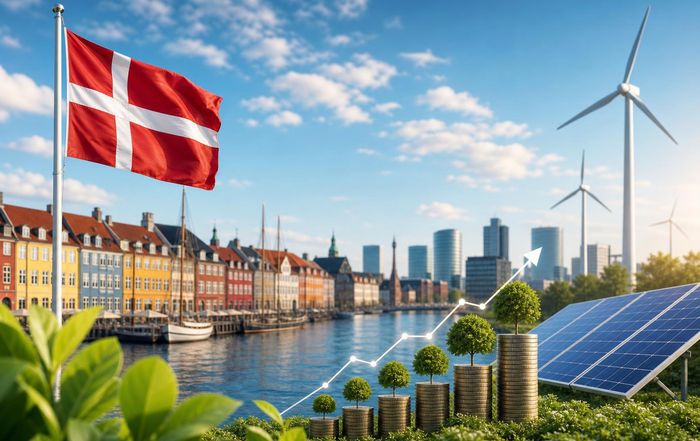
Denmark's Economy and the Architecture of Sustainable Growth in 2026
Denmark's economic story in 2026 is increasingly viewed by policymakers, investors and corporate leaders as a living laboratory for how advanced economies can pursue growth without abandoning social cohesion or environmental responsibility. For Financialdailys.com readers across global financial centers and emerging hubs alike, Denmark offers not a perfect template, but a sophisticated case study in how fiscal discipline, innovation, green industrial policy and trust-based institutions can be woven into a coherent strategy that continues to deliver high living standards while pushing aggressively toward climate neutrality.
Macroeconomic Stability as a Platform for Long-Term Investment
Denmark enters 2026 with a reputation for macroeconomic stability that is the envy of many larger economies. The country's small, highly open structure makes it vulnerable to global shocks, yet the policy framework anchored by Danmarks Nationalbank and the Ministry of Finance has proved remarkably resilient. The long-standing fixed exchange rate policy, effectively pegging the Danish krone to the euro, has limited currency volatility and provided a highly predictable environment for international investors, even as the euro area itself has navigated periodic bouts of uncertainty. Readers can examine the broader euro area context through resources from the European Central Bank.
This stability is not solely a monetary achievement. Denmark's fiscal policy is guided by rules that target structural balance over the medium term, limiting procyclical excesses and giving the government room to deploy countercyclical support when global conditions deteriorate. Public debt remains modest by advanced economy standards, which in turn underpins strong sovereign credit ratings and low borrowing costs for both the public and private sectors. Analysts following sovereign risk and cross-country comparisons can explore the wider fiscal backdrop via IMF economic outlooks.
For Financialdailys.com readers focused on asset allocation and cross-border exposure, this combination of predictable macro policy, disciplined fiscal management and a transparent institutional framework supports Denmark's status as a safe, if relatively low-yielding, destination for capital. It also frees up political and financial bandwidth to focus on long-horizon investments in green infrastructure, innovation and human capital, themes that resonate deeply with our coverage of global economic trends.
A High-Value, Knowledge-Intensive Economic Structure
Denmark's economic model is characterized by a high degree of specialization in knowledge-intensive, export-oriented sectors. Advanced manufacturing, pharmaceuticals, renewable energy technologies and maritime logistics form the backbone of a diversified export base that reaches markets across Europe, North America and Asia. The country's role in global value chains is out of proportion to its population size, reflecting decades of investment in skills, technology and infrastructure.
The life sciences sector, anchored by companies such as Novo Nordisk, Lundbeck and Coloplast, has become one of Denmark's most important growth engines, particularly as global demand for treatments related to diabetes, obesity and chronic diseases has surged. Analysts tracking healthcare and biotech innovation can explore broader sector dynamics through the World Health Organization and sectoral research from organizations like the OECD. This concentration of expertise has not only boosted exports and corporate profitability but has also attracted high-skilled talent from across Europe and beyond, reinforcing Denmark's position in the global competition for knowledge workers.
In parallel, Denmark's maritime and logistics capabilities, led by A.P. Moller - Maersk, continue to play a central role in global trade flows. Despite geopolitical tensions, supply chain disruptions and changing trade patterns, Danish shipping and logistics firms have adapted through digitalization, operational efficiency and a strong focus on decarbonization. Readers following freight rates, shipping capacity and global trade flows can connect these developments with ongoing coverage in the trade and logistics section of Financialdailys.com, where shifts in maritime strategy are increasingly evaluated through both economic and environmental lenses.
The Green Transition as an Industrial Strategy
If there is a single dimension in which Denmark's economic strategy has captured global attention, it is the green transition. Long before climate risk became a mainstream financial concern, Denmark was positioning itself as a pioneer in wind energy, district heating and energy efficiency. In 2026, this legacy has evolved into a full-fledged industrial strategy that seeks to combine climate mitigation with export growth, job creation and technological leadership.
The wind energy sector, led by Vestas, Ørsted and a dense ecosystem of component suppliers and engineering firms, remains central to Denmark's clean energy identity. As global demand for offshore wind projects expands from the North Sea to the Atlantic, Asia-Pacific and the Americas, Danish firms are leveraging decades of experience to secure contracts and partnerships worldwide. Investors monitoring the global energy transition can deepen their understanding of offshore wind economics through resources from the International Energy Agency, which frequently highlights Denmark as an illustrative case.
Beyond wind, Denmark has taken a leading role in developing power-to-X technologies, green hydrogen and sustainable fuels for shipping and aviation. These emerging sectors are supported by a cooperative framework that brings together government agencies, research institutions, utilities and industrial players. For example, large-scale initiatives to produce green fuels for maritime transport align closely with international decarbonization efforts led by the International Maritime Organization, illustrating how national industrial policy can be synchronized with evolving global standards.
For Financialdailys.com readers, the Danish experience underscores how sustainability is no longer a peripheral corporate responsibility issue but a core driver of capital allocation, innovation pipelines and competitive positioning. Our dedicated sustainability coverage increasingly points to Denmark as evidence that ambitious climate targets can coexist with robust profitability and export growth, provided policy frameworks are stable and market signals are clear.
Finance, Capital Markets and the Role of Green Investment
Denmark's financial system, though small in global terms, is sophisticated, well-regulated and deeply intertwined with European and global markets. The Copenhagen stock exchange, operated by Nasdaq Copenhagen, lists both large multinational champions and an expanding cohort of mid-cap and growth companies, many of which are active in renewable energy, technology and life sciences. For global investors tracking equity opportunities, the interplay between Denmark's domestic market and cross-listings in other financial centers illustrates how capital markets can amplify the international footprint of innovative firms. Those interested in broader equity market structures can consult overviews from Nasdaq.
Danish banks, including Danske Bank, Jyske Bank and Nykredit, operate in a regulatory environment that is closely aligned with European Union standards, with strong emphasis on capital adequacy, risk management and consumer protection. The mortgage system, based on covered bonds, is often cited by international observers as a model of stability and transparency. For Financialdailys.com readers focused on banking and credit markets, Denmark provides a compelling example of how conservative lending standards and robust supervision can coexist with high homeownership rates and deep housing finance markets.
In recent years, Denmark has also emerged as a significant hub for sustainable finance. Green bonds, sustainability-linked loans and ESG-focused investment products have proliferated, supported by a regulatory and cultural environment in which climate risk and social responsibility are taken seriously by both investors and issuers. The EU's sustainable finance taxonomy and disclosure requirements, accessible through the European Commission, have further reinforced these trends, pushing Danish financial institutions to refine their methodologies for assessing environmental and social impacts.
These developments align closely with the interests of Financialdailys.com readers seeking to understand how sustainability is reshaping investment strategies. Denmark's experience suggests that sustainable finance is not merely a matter of labeling or marketing but involves deep integration of climate science, regulatory frameworks and long-term scenario analysis into core risk and portfolio management processes.
Labor Markets, Skills and the Flexicurity Model
The sustainability of Denmark's growth model is inseparable from its labor market institutions. The much-discussed "flexicurity" system combines relatively easy hiring and firing rules with generous unemployment benefits and active labor market policies, supported by high levels of unionization and collective bargaining coverage. This arrangement has allowed Danish firms to adjust to technological change and shifts in global demand without generating the kind of long-term unemployment and social dislocation seen in some other advanced economies.
From the perspective of human capital, Denmark invests heavily in education, vocational training and lifelong learning. Universities, technical institutes and adult education centers collaborate closely with industry to ensure that curricula remain aligned with evolving skills needs, particularly in digital technologies, engineering and green industries. International benchmarks from organizations such as the World Economic Forum consistently rank Denmark highly on indicators related to skills, innovation capacity and institutional quality.
For global executives and policy analysts who follow careers and talent dynamics through Financialdailys.com, Denmark's approach offers valuable insights into how labor market flexibility can be reconciled with strong worker protections and social safety nets. The system is not without challenges, especially as demographic aging and technological disruption accelerate, but it demonstrates that social cohesion can be an asset rather than a drag on competitiveness when institutions are trusted and well designed.
Innovation, Technology and the Digital Economy
Denmark's commitment to innovation extends beyond green technologies into the broader digital economy. The country boasts high levels of broadband penetration, strong digital public services and a vibrant startup ecosystem in fields such as fintech, healthtech, robotics and clean technology. Government agencies, universities and private investors collaborate to create an environment in which experimentation is encouraged and regulatory frameworks are adaptive rather than obstructive.
The capital region around Copenhagen and the city of Aarhus have become focal points for entrepreneurial activity, attracting founders and venture capital from across Europe and North America. Danish startups benefit from access to both domestic and EU-wide funding programs, as well as from proximity to established corporate players that are increasingly open to partnerships and acquisitions. Readers interested in broader innovation trends can explore global perspectives through the European Innovation Council and related EU initiatives that support cross-border technology ventures.
For Financialdailys.com, which closely follows startups and technology as drivers of new business models and investment opportunities, Denmark's digital transformation is particularly instructive. The country's public sector has been a pioneer in digital identity, e-government and data-driven service delivery, demonstrating how state capacity can help create the infrastructure on which private innovation thrives. This symbiosis between public and private actors is increasingly relevant to other advanced economies grappling with how to harness artificial intelligence, data analytics and automation without exacerbating inequality or undermining trust.
Housing, Property and Urban Sustainability
The property market is another critical dimension of Denmark's economic landscape, with implications for financial stability, household wealth and urban sustainability. Housing prices in Copenhagen and other major cities have risen significantly over the past decade, driven by low interest rates, strong demand from both domestic and international buyers and limited land availability in central urban areas. Danish regulators and policymakers have responded with a mix of macroprudential tools and planning policies aimed at preventing speculative excess while encouraging new construction and urban densification.
The Danish approach to urban development places strong emphasis on livability, public transport, cycling infrastructure and green spaces, aligning closely with global conversations about sustainable cities and real estate. International investors and developers looking to understand how urban planning can support long-term property values and social resilience can find useful context through organizations such as UN-Habitat, which frequently highlights Nordic cities as exemplars of integrated planning.
For readers of Financialdailys.com interested in property markets, Denmark illustrates how housing policy, transport infrastructure and environmental considerations can converge into a coherent urban strategy. The challenge for the coming decade will be to maintain affordability and social diversity in core urban areas while continuing to attract talent and investment in sectors that depend on dense, innovative ecosystems.
Trade, Geopolitics and the Global Role of a Small State
Denmark's economic fortunes are deeply intertwined with global trade and geopolitical dynamics. As a member of the European Union and a close ally of the United States, Denmark operates within a framework of multilateral institutions and security arrangements that have underpinned decades of prosperity. At the same time, the country must navigate an increasingly complex geopolitical environment marked by shifting power balances, technological rivalry and debates over economic security.
The strategic importance of the Arctic region, where Greenland's location and resources have drawn growing attention, adds another layer of complexity to Denmark's foreign economic policy. Issues related to shipping routes, mineral resources and environmental protection in the Arctic bring Denmark into contact with major powers, including the United States, China and Russia. Analysts seeking a broader view of these dynamics can consult global perspectives from the Council on Foreign Relations and similar institutions that track the intersection of geopolitics and economics.
For Financialdailys.com readers who follow global markets and the evolving architecture of international trade, Denmark offers a vivid illustration of how small, highly open economies must balance their traditional commitment to free trade with emerging concerns about resilience, supply chain security and strategic autonomy. Danish policymakers and business leaders are increasingly engaged in discussions about friend-shoring, diversification of suppliers and the risks associated with overdependence on any single market, particularly in critical technologies and energy systems.
Consumer Behavior, Social Trust and the Demand for Sustainability
A distinctive feature of Denmark's economic model is the high level of social trust, which influences everything from tax compliance and public service delivery to consumer behavior and corporate governance. Danish consumers are generally well informed, digitally savvy and increasingly attentive to the environmental and social footprint of the products and services they purchase. This has created a domestic market that rewards transparency, ethical sourcing and credible sustainability commitments.
Retailers, food producers and service providers have responded by integrating sustainability into their value propositions, from organic and locally sourced food to circular economy initiatives and low-carbon mobility solutions. International observers can explore broader consumer sustainability trends through organizations such as the World Business Council for Sustainable Development, which documents how changing preferences are reshaping business strategies worldwide.
For Financialdailys.com readers following consumer trends, Denmark's experience suggests that demand-side dynamics can be a powerful complement to regulatory and technological drivers of the green transition. As consumers in other advanced economies, from the United States and Canada to Germany, the United Kingdom and the Nordic region, increasingly prioritize sustainability, Denmark's domestic market serves as an early laboratory for business models that may later scale globally.
Lessons for Global Investors and Policymakers
From the vantage point of 2026, Denmark's economy offers a rich source of insights for investors, executives and policymakers across North America, Europe, Asia and beyond. The country demonstrates that it is possible to combine high incomes, robust social protections and ambitious climate policies with strong export performance and innovation capacity. This does not mean that the Danish model is easily replicable in larger, more diverse or less cohesive societies, but it does provide concrete evidence that trade-offs between growth, equity and sustainability are not always as stark as conventional wisdom suggests.
For institutional investors and corporate strategists, Denmark highlights the importance of integrating political and institutional analysis into country and sector assessments. Stable, transparent and trusted institutions reduce risk premia and support long-term investment, particularly in sectors such as renewable energy, infrastructure and advanced manufacturing, where payback periods can stretch over decades. The work of organizations like the Bank for International Settlements underscores how such institutional qualities interact with financial stability and cross-border capital flows.
For policymakers in both advanced and emerging economies, Denmark's experience underscores the value of coherent, long-term strategies that align fiscal policy, regulation, education, innovation and industrial policy around a clear vision of sustainable growth. Short-termism, policy volatility and fragmented governance can undermine even the most promising technological opportunities, whereas stable frameworks and cross-party consensus can attract capital and talent over the long run. Readers can explore comparative policy approaches through resources from the World Bank, which documents diverse paths to development and reform.
For Financialdailys.com, whose coverage spans finance, markets, business strategy and technology, Denmark's story is particularly relevant because it sits at the intersection of many themes shaping the global economy in 2026: the decarbonization of energy and industry, the digital transformation of services and manufacturing, the reconfiguration of global supply chains and the evolving relationship between states, markets and societies.
The Road Ahead: Opportunities and Risks
Looking forward, Denmark faces a series of strategic challenges that will test the resilience of its model. Demographic aging will put pressure on public finances, the labor supply and the healthcare system, requiring continued reforms to pensions, immigration policy and productivity-enhancing innovation. The intensification of global competition in green technologies, particularly from the United States, China, Germany and South Korea, will force Danish firms to maintain their technological edge and move further up the value chain.
At the same time, climate change itself poses physical and transitional risks, from rising sea levels and extreme weather events to shifts in global demand patterns and regulatory frameworks. Danish policymakers and businesses are already engaged in scenario planning and resilience strategies, often drawing on scientific research from institutions such as the Intergovernmental Panel on Climate Change, to anticipate and mitigate these risks.
Yet the underlying strengths of Denmark's economy-its institutional quality, human capital, innovation capacity and deeply embedded culture of sustainability-position it well to navigate these uncertainties. For global readers of Financialdailys.com, Denmark will remain a crucial reference point in debates about how to finance, govern and manage the transition to a low-carbon, digitally enabled and socially inclusive global economy. As investors, executives and policymakers from the United States, the United Kingdom, Germany, Canada, Australia, Asia and beyond seek models of sustainable prosperity, Denmark's evolving experience will continue to provide both inspiration and practical lessons on the complex art of aligning economic growth with long-term planetary and social stability.
