
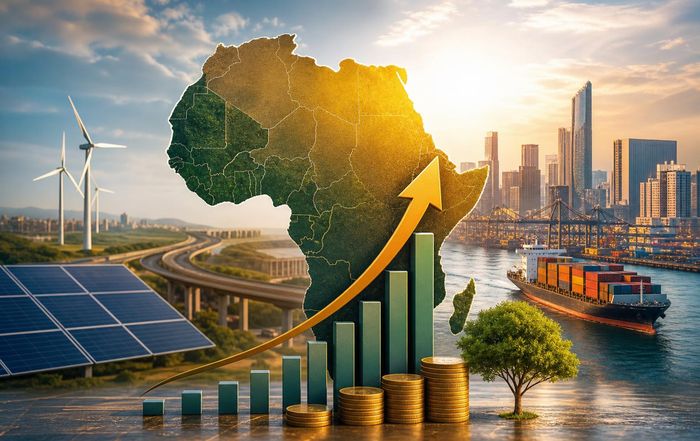
Africa's Business Growth and Investment Potential in 2026
Africa's position in the global economy has shifted decisively over the past decade, moving from a largely overlooked frontier to a complex, fast-evolving arena of opportunity that serious investors and multinational executives can no longer ignore. For the readers of FinancialDailys.com, whose interests span finance, markets, investing, business strategy and global macro trends, Africa in 2026 presents a compelling case study in how demographics, technology, policy reform and capital flows can combine to reshape an entire continent's economic trajectory, while also testing conventional risk models and long-held assumptions about emerging markets.
Demographic Momentum and the Emerging Consumer Class
The starting point for understanding Africa's business potential is its demographic profile. According to the United Nations' latest projections, Africa's population is on track to nearly double by 2050, with a median age of around 19, making it the youngest continent on earth. This youth bulge is already reshaping labor markets, consumption patterns and urban development. As more Africans move into cities and into the formal and semi-formal economy, the continent is rapidly evolving from a resource-driven story into a consumer-driven one, with rising demand for financial services, digital connectivity, housing, healthcare and education.
This demographic transformation has direct implications for investors focused on consumer-facing industries. Analysts at the World Bank have highlighted that Africa's middle-income population, although still relatively small on a per-country basis, is expanding steadily in aggregate, particularly in economies such as Nigeria, Kenya, Ghana, South Africa, Egypt and Morocco. For a detailed view of how these shifts intersect with regional macro trends, readers can explore the broader coverage of global and regional developments on the world economy pages of FinancialDailys.com, where Africa increasingly features in cross-border trade and investment narratives.
Macroeconomic Trends and the New Growth Geography
While Africa is highly heterogeneous, with more than 50 distinct economies, several macro themes stand out in 2026. Growth has become more diversified geographically, with East Africa and parts of Francophone West Africa often outpacing the continent's traditional heavyweight, South Africa. The International Monetary Fund has noted that countries such as Rwanda, Ethiopia, Côte d'Ivoire and Tanzania have consistently ranked among the fastest-growing economies globally over the past decade, driven by infrastructure investment, services expansion and improved business climates.
At the same time, the continent has weathered multiple external shocks, from commodity price volatility to the global inflationary cycle of the early 2020s. Many African central banks, guided by frameworks and research from institutions such as the Bank for International Settlements, have strengthened monetary policy frameworks and adopted more flexible exchange rate regimes, helping to anchor inflation expectations and build credibility. For investors tracking interest rate cycles, currency risk and sovereign debt dynamics, the Africa story is now more nuanced than the traditional "high risk, high return" narrative, a nuance that aligns with the analytical lens applied in the economy section of FinancialDailys.com.
Policy Reform, Governance and the Investment Climate
The investment case for Africa is inseparable from the quality of its institutions and regulatory frameworks. Over the past decade, a number of African governments have pursued reforms aimed at improving the ease of doing business, rationalizing tax regimes and modernizing legal systems. While progress remains uneven, the direction of travel in several key markets has been positive. The World Bank's enterprise surveys and governance indicators show incremental improvements in business registration processes, contract enforcement and digitalization of government services in countries such as Kenya, Ghana, Senegal and Mauritius.
At the continental level, the African Union has played a central role in promoting economic integration and policy coordination, most notably through the African Continental Free Trade Area (AfCFTA), which aims to create a single market for goods and services and facilitate the movement of capital and people. Learn more about how AfCFTA is reshaping trade corridors and industrial value chains through resources from the United Nations Economic Commission for Africa, which has been closely involved in the technical and policy design of the agreement. For corporate strategists and investors who regularly consult the trade coverage on FinancialDailys.com, AfCFTA represents one of the most significant structural developments in global trade architecture since the creation of the European Single Market.
Financial Deepening, Banking and Capital Markets
Financial sector development is one of the clearest indicators of Africa's maturing business environment. Over the last decade, regulatory reforms and technological innovation have accelerated financial inclusion and broadened access to credit and savings products. Regional banking champions such as Standard Bank, Ecobank and Access Bank have expanded their cross-border footprints, while domestic banks in markets like Kenya, Nigeria and Morocco have invested heavily in digital platforms and risk management capabilities. For readers focused on banking and financial services, the evolution of Africa's financial architecture is increasingly relevant to global capital allocation decisions, a theme that resonates with the content featured in the banking section of FinancialDailys.com.
Beyond traditional banking, African capital markets are deepening, albeit from a low base. Stock exchanges in Johannesburg, Lagos, Nairobi, Casablanca and Cairo have sought to attract new listings, improve governance standards and enhance liquidity through regional linkages and technology upgrades. The Johannesburg Stock Exchange (JSE) remains the continent's largest and most sophisticated market, but other exchanges are catching up by introducing new asset classes, including green bonds and infrastructure funds. For global investors examining these developments alongside opportunities in the United States, Europe and Asia, comparative perspectives in the markets coverage on FinancialDailys.com help contextualize Africa's trajectory within broader capital market trends.
The Digital Leap: Technology, Fintech and Innovation Hubs
Africa's technology landscape has undergone a dramatic shift, with the continent emerging as one of the world's most dynamic arenas for digital innovation. The spread of affordable smartphones, falling data costs and the rise of mobile money have created a fertile environment for fintech, e-commerce, healthtech and edtech ventures. The pioneering work of Safaricom with M-Pesa in Kenya laid the foundation for a continent-wide fintech revolution, inspiring startups from Lagos to Cape Town to build products tailored to local needs, from micro-savings and digital lending to cross-border remittances and merchant payments.
In 2026, technology clusters in Nairobi, Lagos, Cape Town, Kigali and Accra are attracting increasing attention from global venture capital funds, development finance institutions and corporate investors. Organizations such as the International Finance Corporation and African Development Bank have been instrumental in providing growth capital and de-risking mechanisms for early-stage and growth-stage companies. Learn more about how digital infrastructure and startup ecosystems are transforming African economies through research from the GSMA, which tracks mobile connectivity and digital inclusion across the continent. For readers of FinancialDailys.com, the intersection of technology, venture capital and corporate innovation is explored in depth in the tech and startups sections, where Africa's innovators now feature alongside peers in Silicon Valley, Europe and Asia.
Startups, Venture Capital and Private Equity
The rise of Africa's startup ecosystem has been one of the most notable investment stories of the past decade. Venture capital funding, while still modest compared to North America, Europe or China, has grown significantly, with annual deal volumes consistently surpassing several billion dollars. Fintech remains the dominant sector, but logistics, agritech, healthtech and climate-focused solutions are gaining momentum. Global investors such as Sequoia Capital, Tiger Global and SoftBank have selectively backed African ventures, while specialized Africa-focused funds and local angel networks have played a critical role in nurturing early talent and building deal pipelines.
Private equity has also been active, particularly in sectors such as consumer goods, healthcare, education, renewable energy and financial services. Firms like Helios Investment Partners, Actis and Development Partners International have executed landmark transactions and exits, helping to establish benchmarks for valuation and governance. For investors exploring alternative assets, Africa's private markets offer a blend of growth potential and complexity that requires careful due diligence, local partnerships and a long-term perspective. The investing content on FinancialDailys.com provides frameworks and case studies that are increasingly applicable to African deal-making, from portfolio construction and risk management to impact measurement.
Infrastructure, Real Assets and Property Markets
Infrastructure remains both a constraint and an opportunity for Africa's economic development. Gaps in power generation, transport networks, water systems and digital connectivity have long been cited as barriers to industrialization and competitiveness. Yet these same gaps represent a vast pipeline of potential projects for investors in real assets, public-private partnerships and blended finance structures. Institutions such as the World Bank's International Development Association (IDA) and the Global Infrastructure Facility have been working with African governments to structure bankable projects and mobilize private capital, particularly in renewable energy, ports, airports and railways.
Property markets across Africa's major cities have experienced cycles of rapid growth, correction and gradual stabilization. Urbanization and the rise of the middle class are driving demand for residential, commercial and industrial real estate, although affordability, regulatory clarity and access to long-term financing remain challenges. Learn more about sustainable urban development and housing finance through resources from UN-Habitat, which examines how African cities are adapting to demographic and environmental pressures. For readers tracking real estate trends, the property section of FinancialDailys.com offers comparative insights across global markets, enabling a more informed view of where African property fits into diversified portfolios.
Trade, Global Supply Chains and Industrialization
Africa's role in global trade is evolving from a predominantly commodity-exporting position to a more diversified profile that includes manufacturing, services and digital exports. The AfCFTA is central to this transformation, as it aims to reduce tariffs, streamline customs procedures and harmonize standards across member states. By creating larger, integrated markets, the agreement is expected to make African economies more attractive for manufacturing investment, particularly in light industries such as textiles, automotive components, pharmaceuticals and processed foods.
Global supply chain realignments, driven by geopolitical tensions and the search for resilience after the disruptions of the early 2020s, have opened a window of opportunity for African economies to position themselves as alternative production hubs. Organizations like the World Trade Organization and UNCTAD have underscored the potential for Africa to capture a greater share of global value chains, especially in sectors where labor costs, resource endowments and proximity to key markets provide a comparative advantage. For corporate decision-makers evaluating production footprints and sourcing strategies, the analysis provided in the business section of FinancialDailys.com helps integrate Africa into a broader global operations perspective.
Sustainability, Climate Transition and Green Investment
Sustainability has become a defining theme in Africa's development narrative, not only because the continent is highly vulnerable to climate change, but also because it holds significant potential in renewable energy, nature-based solutions and sustainable agriculture. Countries such as South Africa, Morocco, Egypt and Kenya have made substantial investments in solar and wind power, supported by multilateral institutions and climate finance initiatives. The International Renewable Energy Agency (IRENA) has documented how Africa could become a major player in global green hydrogen, solar and wind value chains, provided that policy frameworks and financing mechanisms continue to evolve.
At the same time, climate adaptation and resilience are critical priorities, as droughts, floods and changing rainfall patterns threaten food security and livelihoods. The Food and Agriculture Organization (FAO) and African Risk Capacity are working with governments and the private sector to develop climate-smart agriculture, insurance solutions and early warning systems. For investors and corporates committed to environmental, social and governance (ESG) principles, Africa offers both impact and return potential, but also demands rigorous assessment of project viability, community engagement and long-term sustainability. Readers can explore how these themes intersect with global ESG trends and corporate strategy in the sustainability coverage on FinancialDailys.com, where Africa's climate transition is increasingly prominent.
Consumer Markets, Retail and Digital Commerce
Africa's emerging consumer markets are characterized by diversity, informality and rapid digitalization. Traditional retail channels, including open markets and informal trade networks, continue to dominate in many countries, yet modern retail formats and e-commerce platforms are gaining share, particularly in urban centers. Global and regional consumer goods companies such as Unilever, Nestlé and Shoprite have long recognized the continent's potential, adapting product portfolios, price points and distribution strategies to local conditions.
The acceleration of digital commerce, supported by mobile payments, logistics startups and social media marketing, is expanding access to goods and services for consumers previously underserved by formal retail. Learn more about evolving consumer behavior and digital retail trends through research from McKinsey & Company, which has published in-depth analyses of Africa's consumer landscape and growth potential. For investors and corporate strategists, the consumer-focused articles on FinancialDailys.com provide a useful lens on how income growth, urbanization and technology adoption are reshaping demand patterns not only in Africa but across emerging markets globally.
Human Capital, Talent and Careers
Human capital development is both a challenge and an opportunity for Africa's long-term growth. Education systems in many countries face resource constraints, skills mismatches and quality gaps, yet there has been notable progress in primary and secondary enrollment, as well as a surge in private universities, technical institutes and online learning platforms. Organizations like UNESCO and the African Development Bank have emphasized the importance of aligning education and training with labor market needs, particularly in sectors such as technology, healthcare, engineering and green industries.
The rise of remote work and digital platforms has also opened new avenues for African talent to participate in global labor markets, from software development and digital marketing to business process outsourcing. For employers and professionals tracking these shifts, the careers coverage on FinancialDailys.com offers insights into how African talent pools are integrating into international value chains, influencing corporate location strategies and reshaping perceptions of where high-value work can be performed.
Risk, Governance and the Importance of Local Insight
Despite its promise, Africa remains a complex environment for investors and businesses, with significant variation in political stability, regulatory predictability, infrastructure quality and security conditions. Geopolitical tensions, electoral cycles, debt sustainability concerns and governance challenges can all affect project timelines, asset valuations and operational risk. Institutions such as Transparency International and the Mo Ibrahim Foundation provide valuable data and analysis on governance, corruption and leadership trends across the continent, helping investors calibrate risk assessments and engagement strategies.
For sophisticated investors and multinational corporations, success in Africa increasingly depends on building deep local partnerships, understanding sub-national dynamics and adopting a long-term, patient capital mindset. The experience of global companies that have thrived in Africa underscores the importance of robust compliance frameworks, stakeholder engagement and adaptability to rapidly changing regulatory and market conditions. These themes align closely with the analytical approach of FinancialDailys.com, which emphasizes experience, expertise, authoritativeness and trustworthiness in its coverage of finance, stocks and broader business strategy.
Positioning Africa within Global Portfolios and Corporate Strategy
By 2026, Africa has moved from the periphery to a more central position in the strategic planning of institutional investors, multinational corporations and high-net-worth individuals. For global asset managers, the continent offers diversification benefits, exposure to structural growth drivers and opportunities in both public and private markets. For corporates, Africa can serve as a growth engine for revenue, talent and innovation, as well as a testbed for new business models tailored to resource-constrained, digitally savvy consumers.
For the readership of FinancialDailys.com, which spans decision-makers in North America, Europe, Asia and beyond, Africa's business growth and investment potential should be viewed not as an isolated niche, but as an integral component of a global strategy that accounts for demographic shifts, technological disruption, sustainability imperatives and evolving trade patterns. As coverage on FinancialDailys.com continues to track these developments across finance, markets, business, technology and sustainability, Africa's trajectory will remain a critical barometer of how emerging economies can harness opportunity amid uncertainty, and how investors can align capital with long-term value creation on a truly global scale.
