
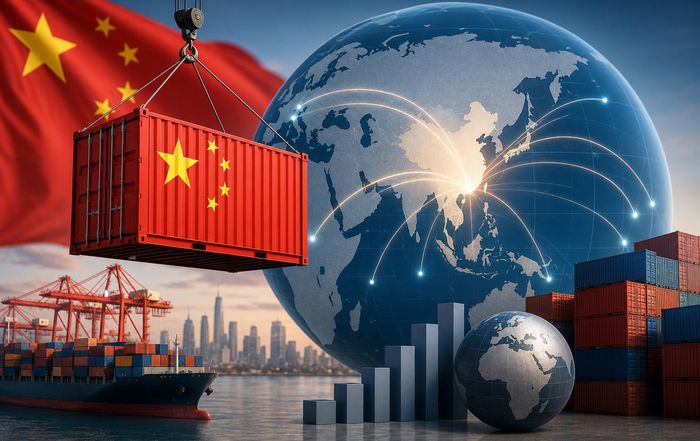
China's Trade Influence on Global Markets
A Defining Force in a Fragmenting Global Economy
China's trade footprint has become one of the central forces shaping global markets, capital flows, supply chains and corporate strategy. For readers of Financialdailys.com, whose interests span finance, markets, investing, business, technology and sustainability across North America, Europe, Asia, Africa and South America, understanding the evolving nature of China's trade influence is no longer optional; it is a strategic necessity that directly affects portfolio allocation, risk management, corporate planning and policy engagement.
China's role as the world's largest exporter and a top importer of commodities, intermediate goods and capital equipment means that shifts in its trade policy, domestic demand and industrial structure reverberate through global equities, fixed income, foreign exchange and real asset markets. Trade tensions with the United States and Europe, the reconfiguration of supply chains across Asia and beyond, and the growing importance of digital trade and green technologies have combined to create a more complex and less predictable environment than the hyper-globalized era that preceded the pandemic.
Against this backdrop, Financialdailys.com positions its 100% original coverage to help decision-makers interpret how China's trade dynamics intersect with global markets and asset prices, how they influence corporate strategy and cross-border business, and how they reshape the economic outlook for key regions from the United States and Europe to Southeast Asia, Africa and Latin America.
From "World's Factory" to Systemic Trade Power
China's ascent from a low-cost manufacturing hub to a systemic trade power has been chronicled extensively by institutions such as the World Trade Organization. Readers can review WTO data on global trade developments to appreciate the scale of China's integration into world commerce, particularly after its WTO accession in 2001. Over two decades, China moved up the value chain from textiles and basic electronics to advanced machinery, information technology hardware, electric vehicles and renewable energy equipment.
This evolution has had profound implications for multinational corporations headquartered in the United States, United Kingdom, Germany, Japan, South Korea and beyond. Many Western and Asian companies initially treated China as a low-cost production base, but gradually reoriented their strategies to serve China as a critical end market, especially in consumer goods, autos, luxury products and industrial equipment. As a result, China's trade policies, import demand and domestic regulatory changes now influence global corporate earnings, valuations and sector leadership in ways that go far beyond simple export volumes.
For investors tracking global stocks and sector rotations, this shift has meant that China-sensitive sectors-from German capital goods and Korean semiconductors to Australian mining and Brazilian agriculture-have become proxies for Chinese trade and industrial cycles. When Chinese policymakers adjust credit conditions, alter infrastructure spending or refine export incentives, the resulting changes in import demand can move commodity prices, shipping rates and equity indices worldwide.
Trade Tensions, Geopolitics and the Rewiring of Supply Chains
The intensification of trade and technology tensions between China and the United States since 2018 has reshaped the landscape for global trade and investment. Tariffs, export controls and investment restrictions have introduced new layers of political risk into what had previously been viewed as a steadily expanding arena of global integration. The Office of the United States Trade Representative provides a useful overview of evolving U.S. trade policy and enforcement actions, which have increasingly targeted Chinese exports and technology sectors.
This geopolitical backdrop has accelerated a trend toward "China plus one" and broader supply chain diversification strategies, with multinational corporations expanding manufacturing and sourcing in countries such as Vietnam, Thailand, Malaysia, India and Mexico. Governments in Europe, North America and Asia have also adopted industrial policies aimed at reducing dependence on Chinese suppliers in strategic areas such as semiconductors, batteries and critical minerals. The European Commission outlines its evolving trade and industrial framework in its trade policy portal, reflecting a growing emphasis on resilience and security.
Despite this diversification, China remains deeply embedded in global supply chains, especially for intermediate goods and components that feed into final assembly in other countries. The OECD has documented this interdependence through its trade in value-added statistics, which show how Chinese inputs are embodied in exports from Europe, North America and the rest of Asia. For portfolio managers and corporate strategists who rely on Financialdailys.com for trade and supply chain insights, the key takeaway is that supply chain "de-risking" does not equate to full decoupling; rather, it produces more complex, multi-node networks in which China remains a central, if more contested, hub.
Impact on Global Commodity and Currency Markets
China's trade influence is particularly visible in commodity markets, where its demand for energy, metals and agricultural products often sets the marginal price. The International Energy Agency regularly highlights China's role in global energy demand and transition dynamics, while the World Bank offers detailed commodity market analyses that underscore China's outsized impact on prices for iron ore, copper, coal, liquefied natural gas and soybeans.
For resource-exporting countries such as Australia, Brazil, South Africa and Canada, Chinese import demand is a central driver of export revenues, fiscal positions and currency valuations. When Chinese infrastructure spending accelerates, these economies often experience stronger growth, tighter labor markets and appreciating currencies; when it slows, the reverse tends to occur. Currency traders monitor these dynamics closely, as shifts in Chinese demand can influence the Australian dollar, Brazilian real, South African rand and Canadian dollar, among others, often in advance of official data releases.
China's influence extends to foreign exchange markets more broadly through the internationalization of the renminbi. While the U.S. dollar remains dominant, the renminbi's role in trade settlement and reserves has been gradually expanding, supported by initiatives tracked by the International Monetary Fund in its data on currency composition of official foreign exchange reserves. As more trade between China and partners such as Russia, the Middle East, Southeast Asia and parts of Africa is denominated in renminbi, global corporates and financial institutions must manage a more complex currency risk environment, with implications for hedging strategies and cross-border lending.
For readers focused on global finance and cross-border capital flows, the interplay between China's trade surpluses, its management of the exchange rate and its outbound investment patterns remains a critical area of analysis. Trade surpluses can feed into reserve accumulation and outward portfolio and direct investment, while domestic economic rebalancing and capital account policies can alter the scale and direction of these flows, affecting asset prices from U.S. Treasuries to European corporate bonds and emerging market debt.
China's Trade and the Global Corporate Profit Cycle
Corporate earnings across sectors and regions are increasingly sensitive to China's trade and domestic demand conditions. Major automakers in Germany, the United States, South Korea and Japan, global luxury houses in France and Italy, and industrial equipment manufacturers in Europe and North America all derive a substantial share of their revenues from Chinese customers or from products that incorporate Chinese components. The Bank for International Settlements has explored how global value chains and trade integration affect corporate leverage and financial cycles, underscoring the financial dimension of trade interdependence.
In technology, China plays a dual role as both a major manufacturing base and a rapidly growing consumer market for smartphones, cloud services, artificial intelligence applications and e-commerce. The World Intellectual Property Organization provides insight into China's innovation trajectory through its Global Innovation Index, illustrating how Chinese firms have become central players in patents and technology development. As Chinese technology companies expand abroad and foreign firms navigate a more regulated digital environment within China, trade in digital services, data flows and cross-border investment in tech sectors have become increasingly important to global earnings and valuations.
For investors who rely on Financialdailys.com for investing and equity strategy perspectives, the integration of China into the global profit cycle means that sector and geographic exposures must be evaluated not only through traditional macroeconomic lenses, but also through trade policy, regulatory risk and competitive dynamics in Chinese and adjacent markets. Earnings surprises and valuation re-ratings often hinge on developments in Chinese demand, regulatory shifts affecting foreign brands, or changes in export competitiveness driven by currency movements and industrial policy.
Banking, Capital Markets and Trade Finance
China's trade influence also runs through the banking system and global capital markets. Trade finance, cross-border lending and project finance related to infrastructure and energy have all been shaped by the rise of Chinese banks and policy institutions. The Bank for International Settlements tracks international banking statistics that reveal the expanding role of Chinese banks in Asia, Africa and parts of Latin America, particularly in supporting trade and investment linked to infrastructure and resource projects.
At the same time, global banks headquartered in the United States, United Kingdom, Switzerland, Germany and Japan continue to provide trade finance, hedging and advisory services to companies engaged in China-related trade. Regulatory developments, sanctions regimes and compliance requirements around export controls and technology transfer have made this a more complex operating environment, demanding sophisticated risk management and legal expertise. For readers of Financialdailys.com who follow banking sector developments, China's trade relationships are increasingly intertwined with credit risk, regulatory capital considerations and the strategic positioning of global banks.
China's domestic capital markets, including its onshore bond and equity markets, are also influenced by trade performance and external demand conditions. Export-oriented companies and sectors react sensitively to changes in trade policy and global demand, which in turn affect indices that global investors access through various channels. The People's Bank of China and other regulators have gradually opened certain segments of these markets to foreign investors, which has increased the transmission of global risk sentiment into Chinese asset prices and, conversely, has allowed Chinese developments to influence global portfolios with greater immediacy.
Property, Urbanization and Trade-Driven Growth Models
China's long-running urbanization and property boom has been closely linked to its trade-driven growth model. Export-oriented manufacturing hubs, port cities and logistics corridors have fueled demand for residential, commercial and industrial property, while infrastructure investments in ports, rail and highways have underpinned both domestic connectivity and international trade capacity. The World Bank offers extensive analysis of urbanization and infrastructure in emerging economies, helping contextualize China's experience within broader global trends.
As China attempts to rebalance its economy away from heavy reliance on property and infrastructure toward consumption and services, the relationship between trade, property markets and local government finance is evolving. Slower property growth and stricter regulation of leverage affect construction activity, steel and cement demand, and local government revenues, all of which have knock-on effects on imports of commodities and capital goods. For readers monitoring global property and real asset trends, understanding this nexus is essential, because shifts in China's property sector can alter global demand for building materials, construction equipment and related services.
Internationally, Chinese firms have become active investors and contractors in property and infrastructure projects across Asia, Africa, Europe and Latin America, often linked to broader trade and logistics strategies. This outward expansion has raised questions about debt sustainability, transparency and local economic impact, which multilateral institutions such as the International Monetary Fund address in their debt sustainability analyses and country reports. The interplay between Chinese trade ambitions, infrastructure financing and local economic conditions will remain a critical area for policymakers and investors over the coming decade.
Technology, Digital Trade and the Next Phase of Globalization
While traditional goods trade remains central to China's economic model, digital trade and technology are becoming increasingly important channels of influence. Chinese platforms in e-commerce, payments, cloud computing and social media have expanded their global reach, competing with American and European incumbents and reshaping digital ecosystems in Southeast Asia, the Middle East, Africa and parts of Europe. The OECD explores these shifts in its work on digital trade and cross-border data flows, highlighting the policy and regulatory challenges that accompany the digitalization of commerce.
In parallel, China's role in the global semiconductor, battery and electric vehicle supply chains has deepened, even as Western governments seek to build alternative capacities. The International Energy Agency and other institutions underscore China's dominance in clean energy supply chains and critical minerals processing, which has major implications for the pace and cost of the global energy transition. Trade policies targeting these sectors, including export controls on certain materials and technologies, have become key tools in the geopolitical competition over technological leadership.
For readers of Financialdailys.com who follow technology trends and their market implications, the intersection of trade policy, industrial strategy and technological innovation in China is a central theme. Companies and investors must navigate a landscape in which regulatory shifts, standards-setting and data governance rules can alter competitive dynamics across borders, while also managing exposure to supply chain disruptions and market access constraints in both Chinese and Western jurisdictions.
Sustainability, Climate Policy and Green Trade
China's trade influence is also increasingly visible in the domain of sustainability and climate policy. As the world's largest emitter of greenhouse gases and a leading producer of solar panels, wind turbines, batteries and electric vehicles, China sits at the heart of the global effort to decarbonize. The United Nations Framework Convention on Climate Change provides an overview of global climate commitments and negotiations, where China's stance on emissions, technology transfer and climate finance plays a pivotal role.
Trade in green technologies has become a focal point for both cooperation and tension. On one hand, the availability of cost-competitive Chinese solar and battery products has accelerated the deployment of renewable energy in Europe, North America and the Global South. On the other hand, concerns about overcapacity, subsidies and strategic dependence have prompted anti-dumping investigations, tariffs and local content requirements in several jurisdictions. The International Renewable Energy Agency offers detailed insights into renewable energy costs and trade patterns, highlighting China's central role in driving cost declines and manufacturing scale.
For businesses and investors who rely on Financialdailys.com for sustainability and ESG-focused analysis, the key issue is how China's trade position in green technologies will shape the economics of decarbonization, the competitive landscape for manufacturers in Europe, North America and Asia, and the regulatory frameworks that govern cross-border flows of climate-related goods and services. As carbon border adjustment mechanisms, green industrial policies and supply chain due diligence rules proliferate, China's responses will significantly influence cost structures, investment decisions and market access for companies across the global economy.
Startups, Innovation Ecosystems and Cross-Border Capital
China's trade and innovation strategies are closely linked to the development of dynamic startup ecosystems in sectors such as artificial intelligence, fintech, biotech and advanced manufacturing. Venture capital flows between China, the United States, Europe and Southeast Asia have been reshaped by regulatory changes, national security concerns and evolving market conditions. Organizations such as Startup Genome provide comparative analysis of global startup ecosystems, illustrating how Chinese cities compete and collaborate with hubs in the United States, United Kingdom, Germany, Singapore and elsewhere.
Foreign investors and entrepreneurs must navigate a more complex regulatory landscape when engaging with Chinese startups, particularly in sensitive technology domains. At the same time, Chinese venture capital and corporate investors have become active participants in startup ecosystems around the world, especially in Asia and parts of Europe, bringing capital, technology partnerships and access to Chinese markets. For readers of Financialdailys.com interested in startups and entrepreneurial finance, understanding how trade policy, data rules and investment screening mechanisms interact is essential for assessing opportunities and risks in cross-border innovation.
The evolving interplay between Chinese and global innovation ecosystems also has implications for talent flows, intellectual property protection and standards-setting, all of which affect the competitiveness of firms and regions. As countries refine their approaches to technology transfer, collaboration and competition, the trade dimension of innovation policy will remain a central axis of global economic strategy.
Labour Markets, Careers and the Human Dimension of Trade
China's trade integration has had far-reaching consequences for labour markets around the world, influencing employment patterns, wage dynamics and skill requirements in both advanced and emerging economies. Institutions such as the International Labour Organization analyze how trade and globalization affect jobs and working conditions, providing a broader context for understanding the distributional impacts of China's rise as a trading power.
In manufacturing-heavy regions of the United States, United Kingdom, Germany and other advanced economies, competition from Chinese imports has contributed to employment shifts and political pressures that have reshaped trade policy debates. At the same time, new opportunities have emerged in services, high-tech manufacturing, logistics and global value chain management, demanding different skill sets and career trajectories. For professionals planning their careers and organizations managing talent strategies, the ability to operate in a trade-intensive, cross-cultural environment has become a valuable asset.
Readers who turn to Financialdailys.com for careers and workplace insights will recognize that China's trade influence is not only a matter of macroeconomics and corporate profits; it is also a driver of structural change in job markets, education systems and professional development. As trade patterns evolve, demand for expertise in supply chain management, international compliance, digital trade, sustainability and emerging markets will continue to grow, shaping the human capital landscape across continents.
Navigating China's Trade Influence: Strategic Considerations for 2026 and Beyond
In 2026, China's trade influence on global markets is characterized by a blend of continuity and transformation. The country remains a dominant exporter and critical importer, deeply embedded in supply chains that span Asia, Europe, North America, Africa and Latin America. At the same time, geopolitical tensions, technological competition, sustainability imperatives and domestic economic rebalancing are reshaping the contours of its trade relationships and, by extension, the risks and opportunities facing global businesses and investors.
For the global audience of Financialdailys.com, spanning finance, markets, business, technology, property and sustainability across multiple regions, several strategic themes stand out. First, trade-related risk is now multidimensional, encompassing tariffs, export controls, sanctions, regulatory changes and reputational considerations, all of which must be integrated into risk management frameworks and investment analysis. Second, diversification of supply chains and markets is a reality, but full decoupling is unlikely; instead, firms and investors must operate in a more complex, multi-polar trade system in which China remains central but no longer unchallenged. Third, the intersection of trade with digitalization and decarbonization will increasingly determine competitive advantage, cost structures and regulatory exposure across sectors.
By combining real-time coverage of markets and macroeconomic developments with in-depth reporting on business strategy, trade policy and sectoral shifts, Financialdailys.com aims to equip its smart and educated readers with the positive insight needed to navigate this evolving landscape. As China's trade influence continues to shape the trajectories of industries, countries and portfolios worldwide, informed, evidence-based analysis will remain essential for making sound decisions in an era of heightened uncertainty and structural change.
