
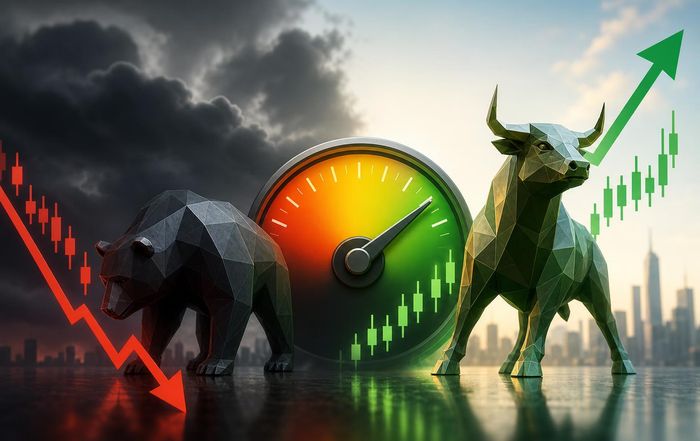
Market Sentiment and the Direction of Stocks in 2026
How Sentiment Became the Market's Dominant Narrative
By 2026, equity markets across North America, Europe, and Asia have become an intricate reflection not only of earnings, cash flows, and macroeconomic data, but of something more elusive and arguably more powerful: investor sentiment. From algorithmic trading desks in New York to retail platforms in Frankfurt and Singapore, the direction of stocks is increasingly shaped by how investors collectively feel and react in real time, rather than by how they carefully compute discounted cash flow models in isolation. For readers of Financialdailys.com, whose interests span finance, markets, investing, and the wider global economy, understanding market sentiment has become an essential competency, not an academic curiosity.
The post-pandemic decade has been marked by persistent inflation scares, abrupt interest-rate cycles, geopolitical shocks, and an extraordinary acceleration in digital trading infrastructure. Against this backdrop, sentiment operates as the bridge between hard data and market pricing, translating central bank statements, corporate earnings, and macroeconomic releases into rapid and often amplified price moves. Institutions such as the Bank for International Settlements and the International Monetary Fund have repeatedly highlighted how shifts in risk appetite can intensify both rallies and downturns, particularly when leverage and liquidity are abundant. Investors who once regarded sentiment as a soft, qualitative overlay are now treating it as a core input in their asset allocation process, using tools from behavioral finance, alternative data, and machine learning to gauge the emotional temperature of the market.
In this environment, the direction of stocks in the United States, the United Kingdom, Germany, and across Europe and Asia is less a simple function of earnings revisions and more a complex interplay between expectations, narratives, and crowd psychology. The task for sophisticated readers of Financialdailys.com is to separate transient mood swings from durable sentiment regimes, and to understand how these regimes interact with valuations, liquidity conditions, and structural trends in technology and sustainability.
Defining Market Sentiment in a Data-Rich Era
Market sentiment is often described as the prevailing attitude of investors toward a particular security, sector, or the market as a whole, but in 2026 this definition has expanded to encompass a broad ecosystem of indicators, from survey-based measures and options pricing to social media analytics and search trends. Institutions like CFA Institute have emphasized that sentiment is not merely optimism or pessimism; it is a multi-dimensional construct that includes risk tolerance, confidence in policy frameworks, and beliefs about future growth and inflation. Learn more about how professional standards integrate behavioral insights at the CFA Institute.
Traditional sentiment indicators such as the American Association of Individual Investors sentiment survey, the CBOE Volatility Index (VIX), and put-call ratios remain widely followed because they offer simple, interpretable snapshots of fear and greed. At the same time, data providers and research houses increasingly mine news feeds, corporate transcripts, and social media platforms using natural language processing to infer whether the tone surrounding sectors such as technology, banking, or property is turning more positive or negative. This shift reflects a broader recognition, discussed in depth by Nobel laureate Robert Shiller and others, that narratives and stories can drive economic outcomes as much as formal models. Readers seeking a deeper theoretical foundation can explore the behavioral finance resources at Yale School of Management and London School of Economics, which have documented how sentiment and narratives influence asset prices over time.
For a publication like Financialdailys.com, which serves readers across the United States, Europe, and Asia, the practical implication is clear: understanding sentiment now requires both quantitative tools and qualitative judgment. Market professionals increasingly triangulate between hard data on earnings and economic activity, sentiment indicators, and narrative analysis to form a coherent view of where stocks may be headed.
The Behavioral Foundations Behind Sentiment
The rise of sentiment as a dominant driver of markets is deeply rooted in behavioral finance, a field that has grown from a niche academic discipline into a mainstream pillar of investment practice. Research by scholars such as Daniel Kahneman, Amos Tversky, and Richard Thaler has shown that investors are not strictly rational optimizers; they are influenced by cognitive biases, emotional reactions, and social dynamics. These biases, including loss aversion, overconfidence, anchoring, and herding, can systematically distort how information is processed and how risks are priced. For a structured overview of these concepts, readers can review material from the Behavioral Finance section at University of Chicago Booth School of Business.
Loss aversion, for instance, leads investors to react more strongly to losses than to gains of the same size, which can amplify selling pressure during downturns and create sharp downward spikes in stock prices. Overconfidence can drive investors to overestimate their own ability to forecast markets, resulting in excessive trading and the persistence of crowded positions in favored sectors such as technology or clean energy. Herding behavior, which is especially visible in online communities and social trading platforms, can push prices far above or below levels justified by fundamentals, as seen in previous episodes of meme-stock rallies and short squeezes.
These behavioral forces are not confined to retail investors; institutional players, including hedge funds, pension funds, and sovereign wealth funds, are equally susceptible, particularly when career risk and short-term performance pressures are involved. The Bank of England and the European Central Bank have both published analyses illustrating how herding among large institutions can exacerbate market cycles, especially when risk models and regulatory frameworks encourage similar positioning. Understanding these dynamics allows readers of Financialdailys.com to interpret market moves not simply as rational reactions to news, but as the outcome of human biases operating within complex financial systems.
Global Macro Conditions and Sentiment in 2026
The macroeconomic context of 2026 is central to understanding how sentiment is shaping the direction of stocks. After years of fluctuating inflation and interest-rate adjustments, central banks from the Federal Reserve in the United States to the European Central Bank, the Bank of England, the Bank of Japan, and the Reserve Bank of Australia have been attempting to engineer a soft landing: slowing inflation without triggering deep recessions. Market sentiment has oscillated between confidence in a controlled disinflation and fear of renewed inflationary pressures or policy mistakes. Readers can follow the evolving macro narrative through the economic analysis provided by Financialdailys Economy coverage.
In the United States, sentiment toward equities has been strongly influenced by expectations about the path of policy rates, wage growth, and productivity gains driven by artificial intelligence and automation. The Federal Reserve's communication strategy, including its dot plots and forward guidance, has become a key sentiment driver, with every speech by Chair Jerome Powell or other Federal Open Market Committee members scrutinized for hints about the future direction of policy. Learn more about monetary policy frameworks at the Federal Reserve's official site, where speeches and meeting minutes are publicly available.
In Europe, investors in Germany, France, Italy, Spain, and the Netherlands are balancing concerns about energy security, structural competitiveness, and demographic trends against optimism about green investment and digital transformation. The European Commission and OECD have both highlighted the importance of structural reforms and investment in innovation to sustain growth and support equity valuations. In Asia, sentiment in markets such as Japan, South Korea, Singapore, and China is shaped by the interaction between domestic policy choices, export demand, and geopolitical dynamics, particularly in technology supply chains. The World Bank and Asian Development Bank provide detailed regional outlooks that help frame these sentiment drivers for global investors.
For readers of Financialdailys.com, this macro backdrop underscores that sentiment is not free-floating; it is anchored, however imperfectly, in expectations about growth, inflation, and policy. The direction of stocks in 2026 reflects a continuous re-pricing of these expectations, with sentiment amplifying or dampening the impact of new information.
Sentiment Across Sectors: Tech, Banking, Property, and Beyond
Sector-specific sentiment has become a defining feature of equity markets, as investors differentiate between winners and losers in a rapidly changing economic landscape. In technology, the narrative in 2026 is dominated by artificial intelligence, cloud computing, cybersecurity, and semiconductor supply chains. Companies in the United States, South Korea, Japan, and Taiwan that are perceived as leaders in AI infrastructure and applications benefit from a powerful positive sentiment tailwind, even when valuations appear stretched by traditional metrics. Analysts and institutional investors increasingly rely on specialized research and resources such as MIT Technology Review and Stanford HAI to gauge the depth and durability of these technological shifts, which in turn influence sentiment toward tech stocks. Readers can stay updated on the intersection of markets and innovation through Financialdailys Tech coverage.
In banking, sentiment is more fragile, shaped by memories of past crises, regulatory changes, and the evolving interest-rate environment. Banks in the United States, United Kingdom, and Europe have faced scrutiny over capital adequacy, exposure to commercial real estate, and the impact of fintech and digital currencies. Guidance from regulators such as the Basel Committee on Banking Supervision and national authorities has a direct bearing on investor confidence in the sector. Learn more about global banking standards at the Bank for International Settlements, which hosts key regulatory documents and research. For readers focused on this sector, Financialdailys Banking section offers ongoing analysis of how sentiment and regulation interact to shape bank valuations.
Property markets, both residential and commercial, remain a critical sentiment driver across regions such as North America, Europe, and Asia-Pacific. Rising or falling property prices influence consumer confidence, household balance sheets, and bank asset quality. Organizations like OECD and IMF have highlighted how property cycles can amplify economic booms and busts, which in turn feed back into equity markets. Investors tracking listed real estate investment trusts (REITs) and property developers must pay close attention not only to rental yields and vacancy rates, but also to shifts in sentiment about urbanization, remote work, and demographic trends. Readers can explore property-related market coverage via Financialdailys Property insights.
Other sectors, including energy, healthcare, consumer discretionary, and industrials, each have their own sentiment drivers, ranging from regulatory approvals and patent pipelines to commodity prices and global trade flows. The International Energy Agency and World Trade Organization provide valuable data and analysis that help investors interpret how policy shifts, trade disputes, and sustainability initiatives shape sectoral sentiment and, ultimately, stock performance.
Retail Investors, Social Media, and the New Sentiment Infrastructure
One of the most significant transformations in market sentiment over the past decade has been the rise of retail investor influence, amplified by social media, commission-free trading platforms, and online communities. While institutional investors still dominate in terms of assets under management, retail flows can drive sharp short-term moves in individual stocks and sectors, especially when concentrated in highly shorted or thinly traded names. The episodes involving meme stocks in the United States and similar retail-driven surges in Europe and Asia demonstrated how quickly sentiment can turn into price action when digital coordination is possible.
Platforms such as X (formerly Twitter), Reddit, and YouTube have become real-time sentiment engines, where narratives about particular stocks or sectors can spread rapidly and influence trading behavior across the United States, Canada, the United Kingdom, Germany, and beyond. Academic studies from institutions like Harvard Business School and University of Oxford have documented how social media sentiment correlates with short-term price volatility and trading volume, particularly in small- and mid-cap equities. Learn more about digital market dynamics through resources at Harvard Business School's working paper series.
For readers of Financialdailys.com, this evolution has two key implications. First, monitoring social media and online forums has become a necessary complement to traditional research, particularly for investors exposed to sectors or stocks susceptible to retail enthusiasm or panic. Second, the democratization of market access has made investor education more important than ever, as new participants must navigate a complex landscape of information, misinformation, and hype. The Financialdailys Consumer section regularly addresses how households and individual investors can protect themselves from sentiment-driven excesses while still taking advantage of long-term market opportunities.
Quantifying Sentiment: From Surveys to Machine Learning
As sentiment has become more central to market behavior, investors and analysts have sought more rigorous methods to measure and incorporate it into their decision-making processes. Traditional tools such as investor surveys, fund flow data, and volatility indices remain widely used, but they are increasingly complemented by sophisticated analytics drawn from large, unstructured datasets. Institutions like Bloomberg, Refinitiv, and specialized fintech firms provide sentiment scores based on news articles, earnings call transcripts, and social media posts, using natural language processing and machine learning models to classify text as positive, negative, or neutral and to track changes over time.
Academic research published in journals associated with SSRN and Journal of Finance has shown that sentiment indicators can have predictive power for short-term returns, particularly in small-cap, illiquid, or hard-to-value stocks. However, the relationship is far from mechanical; sentiment can remain elevated or depressed for extended periods, and contrarian strategies that bet against extreme sentiment readings require careful risk management. Investors must therefore interpret sentiment data in conjunction with fundamentals, valuation metrics, and macro conditions. Learn more about quantitative approaches to sentiment at SSRN, which hosts a wide range of working papers on the topic.
For sophisticated readers of Financialdailys.com, the key is to treat sentiment analytics as one layer in a multi-dimensional investment framework. Portfolio managers increasingly integrate sentiment into their risk models, trading signals, and scenario analyses, while recognizing that sentiment can change rapidly in response to unexpected news, policy actions, or geopolitical developments. The Financialdailys Markets coverage often highlights how shifts in sentiment indicators align-or fail to align-with underlying fundamentals.
Sentiment, Sustainability, and the Re-Pricing of Risk
In parallel with technological and macroeconomic shifts, the rise of environmental, social, and governance (ESG) considerations has introduced a new dimension to market sentiment. Over the past several years, investors across Europe, North America, and Asia have increasingly integrated sustainability into their investment decisions, influenced by regulatory initiatives, stakeholder expectations, and a growing body of evidence linking ESG performance to long-term financial outcomes. Organizations such as the United Nations Principles for Responsible Investment, the Sustainability Accounting Standards Board, and the Task Force on Climate-related Financial Disclosures have played important roles in shaping the frameworks that guide sustainable investing. Learn more about sustainable business practices via resources from the UN PRI.
Sentiment toward companies and sectors is now heavily influenced by perceptions of climate risk, social impact, and governance quality. Firms perceived as leaders in decarbonization, circular economy models, or inclusive employment practices often enjoy a valuation premium, particularly in markets such as the United Kingdom, Germany, the Nordics, and parts of Asia-Pacific. Conversely, companies associated with high emissions, environmental controversies, or governance failures can face a sentiment discount, which may translate into higher capital costs and greater regulatory scrutiny. The International Energy Agency and IPCC provide data and analysis that shape investor expectations about the transition to a low-carbon economy and its implications for sectors such as energy, utilities, and transportation.
For readers of Financialdailys.com, sustainability is no longer a peripheral theme; it is a core determinant of how global investors view risk and opportunity across markets. The Financialdailys Sustainability section examines how evolving ESG standards, regulatory developments in Europe and Asia, and changing consumer preferences are feeding into market sentiment and the direction of stocks.
Navigating Sentiment: Implications for Strategy and Risk Management
The central challenge for investors in 2026 is not merely to observe sentiment, but to navigate it effectively. Professional asset managers, family offices, and sophisticated individual investors must decide when to align with prevailing sentiment trends and when to adopt a contrarian stance, recognizing that both approaches carry risks. In momentum-driven markets, following positive sentiment can be profitable, particularly in sectors benefiting from structural growth drivers such as AI, healthcare innovation, or green infrastructure. However, history and research from institutions like BIS and IMF remind investors that sentiment-driven rallies can overshoot, leaving late entrants exposed to sharp reversals.
Contrarian strategies, which seek to exploit extreme pessimism or euphoria, require patience, strong risk controls, and a deep understanding of the underlying fundamentals. Investors may, for example, identify markets or sectors where sentiment has become excessively negative due to short-term concerns, even as long-term fundamentals remain intact. They might also reduce exposure to areas where sentiment appears unreasonably optimistic relative to earnings prospects and macro risks. The Financialdailys Investing section frequently explores how professional investors blend sentiment analysis with valuation and macro views to construct resilient portfolios.
Risk management frameworks have also evolved to account for sentiment-driven volatility. Portfolio managers increasingly use scenario analysis and stress testing to assess how sudden shifts in sentiment-triggered by policy surprises, geopolitical shocks, or technological disruptions-could impact portfolio performance. Institutions like Basel Committee on Banking Supervision and Financial Stability Board have highlighted the importance of monitoring market liquidity and leverage, as sentiment-driven sell-offs can be exacerbated when liquidity evaporates. For investors in banking, property, and cyclical sectors, this intersection of sentiment and liquidity risk is particularly critical.
The Role of Financialdailys.com in a Sentiment-Driven Market
In a world where sentiment can swing rapidly and information flows are relentless, trusted, high-quality analysis becomes a competitive advantage. Financialdailys.com positions itself as a platform that combines timely market coverage with deep, contextual insights, helping readers distinguish between noise and signal across finance, markets, investing, business, and the global economy. By drawing on expert commentary, data-driven research, and coverage spanning stocks, business, trade, and world developments, the publication aims to support informed decision-making among professionals and serious individual investors.
For readers across the United States, United Kingdom, Germany, Canada, Australia, and key markets in Asia, Africa, and South America, Financialdailys.com serves as a bridge between local developments and global sentiment trends. Whether the topic is central bank policy in Washington and Frankfurt, technology regulation in Brussels, property cycles in China, or sustainability initiatives in Scandinavia, the platform's coverage is designed to clarify how these factors intersect with investor psychology and market pricing. In doing so, it contributes to a more transparent and informed marketplace, where sentiment is recognized, analyzed, and contextualized rather than simply endured.
Looking Ahead: Sentiment as a Permanent Feature of Modern Markets
As 2026 progresses, it is increasingly clear that market sentiment is not a transient phenomenon but a permanent feature of modern financial systems, deeply intertwined with technology, regulation, and global macroeconomic forces. The proliferation of real-time data, algorithmic trading, and digital communication channels ensures that sentiment will continue to be both a driver and a reflection of stock market direction across regions, from North America and Europe to Asia and emerging markets. Institutions such as IMF, World Bank, and leading academic centers will undoubtedly continue to refine our understanding of how sentiment interacts with fundamentals, liquidity, and policy.
For the readership of Financialdailys.com, the strategic imperative is to integrate sentiment awareness into every stage of the investment process, from macroeconomic analysis and sector allocation to security selection and risk management. This does not mean abandoning fundamental research or long-term perspectives; rather, it means recognizing that the path from fundamentals to prices is mediated by human behavior, narrative, and emotion. By combining rigorous analysis with a nuanced understanding of sentiment, investors can position themselves to navigate volatility, identify mispricings, and participate in the growth opportunities that continue to emerge across global markets.
In this sense, sentiment is not merely a source of risk; it is also a source of opportunity for those who approach it with discipline, humility, and a commitment to continuous learning. As markets evolve and new technologies reshape how information is created and consumed, Financialdailys.com will remain focused on providing the insights, context, and expertise that enable its readers to understand and harness the power of sentiment in shaping the direction of stocks worldwide.
