
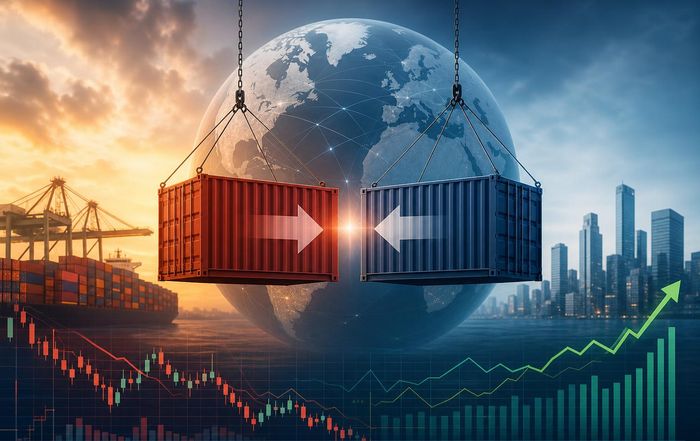
Trade Policy and Its Impact on Market Confidence in 2026
How Trade Policy Became a Primary Driver of Market Sentiment
By 2026, trade policy has moved from being a technical backdrop to becoming one of the central forces shaping global market confidence, capital flows and corporate strategy. For readers of FinancialDailys.com, whose interests span finance, markets, investing and the broader world economy, understanding this shift is no longer optional; it is a prerequisite for sound decision-making. The interplay between tariffs, export controls, industrial policy and geopolitical alliances now influences everything from equity valuations in the United States and Europe to currency stability in emerging Asia and sovereign risk in Africa and South America, and the result is a landscape in which confidence can strengthen or evaporate in response to a single policy announcement, a new sanctions package or a breakdown in negotiations between major trading partners.
This heightened sensitivity is partly the legacy of the trade tensions and supply chain disruptions that began in the late 2010s and were intensified by the pandemic years, but it is also the product of a more fundamental reordering of the global trade architecture, as the World Trade Organization, accessible via WTO resources, faces pressure from regional trade blocs, digital trade agreements and a proliferation of sector-specific rules covering technology, data and climate-related measures. Investors and corporate leaders have learned that trade policy is no longer a slow-moving, technocratic domain; it is dynamic, politicised and capable of rapidly reshaping competitive advantage across sectors as diverse as semiconductors, automotive, energy, agriculture and financial services.
The Mechanisms Linking Trade Policy and Market Confidence
To appreciate how trade policy influences markets, it is useful to examine the main transmission channels through which decisions taken in Washington, Brussels, Beijing, London, Tokyo, Ottawa, Canberra and other capitals affect business sentiment, asset prices and real economic activity. Market participants watch not only the formal texts of trade agreements and tariff schedules, but also the broader policy narratives, as reflected in official communications from institutions such as the International Monetary Fund, which provides regular assessments of trade developments on the IMF website, and the Organisation for Economic Co-operation and Development, which publishes analysis on global trade and investment.
The first and most visible channel is the direct effect of tariffs and non-tariff barriers on corporate earnings and sectoral profitability. When new duties are imposed on imports of steel, electronics or agricultural products, or when export controls are tightened on advanced chips and manufacturing equipment, analysts must quickly revise earnings forecasts, re-evaluate supply chain resilience and adjust valuation models. This in turn influences equity and credit markets, with investors reacting not only to the immediate cost impact, but also to the perceived durability of the policy regime.
A second channel is the impact on business investment and capital expenditure. Companies in the United States, the United Kingdom, Germany, Japan, South Korea and other major manufacturing hubs increasingly make investment decisions based on their assessment of trade policy stability over a multi-year horizon. When policymakers signal a commitment to open markets and predictable rules, as seen in some of the newer regional accords documented by the World Bank in its trade and competitiveness insights, corporate boards are more willing to commit to new plants, cross-border mergers and research and development, which reinforces market confidence. Conversely, when policy is volatile, investment is deferred, and markets price in slower growth and higher risk premiums.
The third channel is the effect on currencies and capital flows. Trade policy shapes expectations about export performance, current account balances and relative competitiveness, which in turn affect foreign exchange markets. Episodes of tariff escalation or sanctions can trigger safe-haven flows into the US dollar, Swiss franc or Japanese yen, while undermining the currencies of economies seen as exposed to trade disruptions. For readers of FinancialDailys.com following banking and cross-border capital movements, the interaction between trade policy and monetary policy has become especially important, as central banks must consider how trade shocks influence inflation and growth.
Finally, there is an important psychological and narrative dimension. Market confidence is not only a function of data; it is also shaped by stories investors tell themselves about the future. Trade policy disputes between the United States and China, or between the European Union and other partners, become symbols of broader geopolitical fragmentation or cooperation. Coverage by outlets such as the Financial Times, accessible at ft.com, and analysis from think tanks like the Peterson Institute for International Economics, which offers research on trade policy dynamics, help to frame these narratives, influencing whether investors interpret developments as manageable friction or as the beginning of a more profound decoupling.
Regional Perspectives: United States, Europe and Asia
The relationship between trade policy and market confidence plays out differently across regions, reflecting distinct economic structures, political priorities and historical experiences. In the United States, trade policy since the late 2010s has oscillated between protectionist impulses and efforts to rebuild alliances and supply chains with trusted partners. The continuation of industrial policy measures, including subsidies and incentives for domestic semiconductor, clean energy and critical mineral production, has created both opportunities and uncertainties for investors. On one hand, markets have rewarded firms seen as beneficiaries of reshoring and friendshoring strategies; on the other, concerns persist about retaliation, compliance burdens and the long-term fiscal cost of such policies, as discussed in analyses by Brookings Institution, which provides commentary on US trade and industrial policy.
In Europe, and particularly in the United Kingdom, Germany, France, Italy, Spain and the Netherlands, trade policy has been shaped by the dual challenge of managing relations with major partners while advancing strategic autonomy in areas such as energy, digital infrastructure and defence. The European Union has pursued a more active trade defence posture, including anti-subsidy investigations and carbon border adjustment mechanisms, which have implications for global supply chains and investment decisions. At the same time, European policymakers have sought to preserve open trade with like-minded economies, including Canada, Australia, Japan and South Korea, through updated agreements and digital trade provisions. For businesses and investors tracking European developments via sources such as European Commission trade policy updates, available through EU trade information, the key question is whether this balancing act can sustain market confidence without triggering retaliatory cycles.
Asia presents a different configuration. Economies such as China, Japan, South Korea, Singapore, Thailand and Malaysia are deeply integrated into regional supply chains, many of which are now being reconfigured in response to geopolitical tensions and new trade frameworks like the Regional Comprehensive Economic Partnership. China's trade policy, including its own use of export controls and industrial subsidies, has become a central variable for global markets, influencing everything from commodity prices to technology valuations. At the same time, other Asian economies are positioning themselves as alternative manufacturing and innovation hubs, a trend that investors can follow through research from Asian Development Bank, which provides insights on regional trade integration. For FinancialDailys.com readers focused on markets and stocks, the resulting competition and diversification are critical to understanding sector rotation and cross-border portfolio strategies.
Sectoral Impacts: Technology, Energy, Property and Consumer Markets
Trade policy does not affect all sectors equally; instead, it creates a patchwork of winners and losers that shifts over time as regulations evolve. The technology sector has been at the forefront of these changes, with export controls on advanced semiconductors, telecommunications equipment and dual-use technologies reshaping global value chains. Companies in the United States, Taiwan, South Korea, Japan, the Netherlands and China have had to navigate complex licensing regimes and compliance requirements, while investors assess the long-term implications for innovation, market access and intellectual property protection. Industry analysis from McKinsey & Company, accessible via technology and trade reports, highlights how firms are rethinking their geographic footprint, supplier relationships and research collaboration in response to these policy shifts, and this in turn influences valuations and risk assessments across global equity markets.
In the energy sector, trade policy interacts with climate policy and security considerations. The drive towards decarbonisation, accelerated by commitments under the Paris Agreement and national net-zero targets, has led to new forms of trade in renewable technologies, critical minerals and carbon credits. At the same time, geopolitical tensions and sanctions, including those affecting major oil and gas exporters, have contributed to price volatility and supply uncertainties. For investors and policymakers, resources such as the International Energy Agency, which offers analysis on energy markets and security, provide essential context for understanding how trade measures, such as restrictions on certain energy technologies or preferential treatment for low-carbon imports, influence market confidence and capital allocation.
The property sector, a core interest for FinancialDailys.com readers following property, is also affected by trade policy, albeit more indirectly. Shifts in trade flows and industrial policy can influence regional economic prospects, employment levels and infrastructure investment, which in turn shape demand for commercial real estate, logistics facilities and residential developments. For example, the establishment of new manufacturing hubs in Southeast Asia, Eastern Europe or parts of North America can drive up land values and construction activity, while trade-related downturns in export-oriented regions can depress property markets. Global insights from JLL and CBRE, including research available through JLL global real estate insights and CBRE market research, illustrate how investors factor trade policy into their assessments of location risk and long-term asset performance.
Consumer markets and retail are influenced by trade policy through its impact on prices, product availability and household confidence. Tariffs on consumer goods, disruptions in logistics or regulatory barriers can lead to higher prices and reduced choice for consumers in the United States, Europe, Asia and beyond. In turn, this affects consumer sentiment, as captured in surveys and indicators published by organisations such as Conference Board, which shares data on global consumer confidence. For readers of FinancialDailys.com focused on consumer trends, the key consideration is how trade policy shapes the inflation outlook, wage dynamics and spending patterns, all of which feed back into corporate earnings and equity valuations in retail, e-commerce and consumer goods sectors.
Supply Chains, Resilience and Strategic Reconfiguration
One of the most significant developments of the past decade has been the rethinking of global supply chains in light of trade tensions, pandemic disruptions and geopolitical risks. Companies and investors have moved beyond the traditional focus on just-in-time efficiency to place greater emphasis on resilience, redundancy and strategic diversification. Trade policy is central to this recalibration, as tariffs, export controls, local content requirements and new trade agreements all influence where firms source inputs, locate production and serve customers.
Research from World Economic Forum, accessible at weforum.org, has documented how supply chain resilience has become a board-level priority, with organisations across manufacturing, pharmaceuticals, technology and consumer goods evaluating alternative configurations that balance cost, risk and sustainability. For example, some firms in Europe and North America are adopting nearshoring strategies, relocating parts of their production to neighbouring countries that share trade agreements and regulatory standards, while others in Asia and Latin America are diversifying suppliers to reduce dependence on any single jurisdiction. These decisions have direct implications for trade flows, employment and investment, and they also affect market confidence, as investors reward companies perceived as better prepared for policy shocks.
For FinancialDailys.com, which covers business strategy and trade developments, an important dimension of this shift is the increasing integration of sustainability criteria into supply chain decisions. Trade policy is beginning to incorporate environmental and social standards, including due diligence requirements on labour practices and deforestation, as well as carbon-related border measures. Businesses that proactively align with these emerging norms tend to enjoy stronger reputational capital and more stable access to markets, reinforcing investor confidence, while those that lag face rising compliance costs, potential trade restrictions and elevated legal and operational risks.
Financial Markets' Response: Pricing Policy Risk in Real Time
Financial markets in 2026 are more adept than ever at pricing trade policy risk in real time, thanks to advances in data analytics, artificial intelligence and alternative information sources. Asset managers, hedge funds and corporate treasurers use sophisticated models to assess the probability and impact of new trade measures, drawing on policy signals, legislative calendars, election forecasts and geopolitical analysis. Information from sources such as Bloomberg, accessible at bloomberg.com, and Refinitiv, as well as open data from central banks and multilateral institutions, is integrated into trading algorithms and risk dashboards, enabling rapid adjustments to portfolios as events unfold.
This increased sophistication, however, does not eliminate uncertainty; it simply allows markets to respond more quickly. Sudden announcements of tariffs, sanctions or regulatory changes can still trigger sharp movements in equities, bonds, currencies and commodities, particularly when they challenge established expectations. For investors following investing and stocks coverage on FinancialDailys.com, one of the key lessons is that trade policy risk is now a structural feature of the investment landscape, not a temporary anomaly, and must be incorporated into strategic asset allocation, hedging strategies and scenario planning.
Credit markets also reflect trade policy dynamics, as rating agencies and lenders adjust their assessments of sovereign and corporate risk based on exposure to trade disruptions. Economies heavily reliant on a narrow set of export markets or commodities may face higher borrowing costs if policy uncertainty threatens demand or access. Conversely, countries that successfully diversify their trade relationships and demonstrate stable, predictable policy frameworks may benefit from improved credit profiles and lower spreads. Institutions such as Standard & Poor's, Moody's and Fitch Ratings provide detailed commentary on these linkages, which can be complemented by macroeconomic analysis from Bank for International Settlements, available at bis.org, for readers seeking a deeper understanding of how trade policy affects global financial stability.
Careers, Skills and Corporate Governance in a Trade-Driven World
The growing importance of trade policy for market confidence has significant implications for careers, skills development and corporate governance. Executives, board members and professionals in finance, law, supply chain management and technology now require a more sophisticated understanding of international trade rules, geopolitical risk and regulatory compliance than in previous decades. For readers exploring careers on FinancialDailys.com, this translates into rising demand for expertise in trade law, customs operations, export control compliance, economic sanctions and international negotiation.
Business schools and professional training providers have responded by expanding programmes that integrate trade policy, geopolitics and sustainability into their curricula, recognising that future leaders must navigate an environment where strategic decisions are inseparable from policy risk. Resources from institutions such as Harvard Business School, which publishes case studies and articles on global trade and strategy, and INSEAD, with its focus on international management, are increasingly used not only by students but also by senior executives seeking to update their skills. From a governance perspective, boards are enhancing oversight of trade-related risks, often establishing dedicated committees or integrating trade policy considerations into risk and strategy discussions, a trend that strengthens the link between corporate decision-making and market confidence.
Sustainability, Trade and Long-Term Market Stability
Sustainability has become a central theme in the evolution of trade policy, with implications for long-term market confidence and economic resilience. Governments and international organisations are exploring ways to align trade rules with climate objectives, biodiversity protection and social inclusion, recognising that unchecked environmental degradation and inequality can undermine both economic growth and political stability. Measures such as carbon border adjustment mechanisms, green industrial subsidies and sustainability-linked trade finance are part of this emerging landscape, which investors and businesses must understand in order to navigate future risks and opportunities.
For FinancialDailys.com, which devotes coverage to sustainability alongside economy and business topics, the intersection of trade and sustainability is particularly relevant. Organisations such as the United Nations Conference on Trade and Development, accessible via unctad.org, and the World Resources Institute, which provides analysis on sustainable trade and climate, highlight how environmentally conscious trade policies can support innovation, green jobs and resilience, while poorly designed measures risk fragmenting markets and creating new barriers for developing economies. Market confidence over the long term will depend on whether policymakers manage to craft trade frameworks that support both competitiveness and sustainability, avoiding zero-sum approaches that pit climate goals against economic opportunity.
Strategic Takeaways for Investors, Businesses and Policymakers
As of 2026, trade policy is firmly embedded in the core of market analysis, corporate strategy and public policy. For investors, the key takeaway is that trade-related risks and opportunities must be systematically integrated into portfolio construction, risk management and due diligence, rather than treated as episodic shocks. This involves monitoring policy developments across major economies, assessing sectoral exposure, and using scenario analysis to evaluate how different trade trajectories could affect growth, inflation, valuations and currency movements. The resources and coverage provided by FinancialDailys.com, spanning finance, markets and world developments, can support this effort by offering timely analysis and contextual insight.
For businesses, trade policy is now a strategic variable on par with technology, competition and consumer trends. Corporate leaders must build more resilient and diversified supply chains, invest in compliance and risk management capabilities, and engage proactively with policymakers and industry associations to help shape the regulatory environment. Learning from case studies and best practices, as documented by organisations like World Trade Organization and OECD, and by leading consultancies and academic institutions, can help companies anticipate shifts rather than merely react to them. Firms that successfully integrate trade policy insight into their decision-making are better positioned to maintain investor confidence, protect margins and capture new market opportunities in a fragmented yet interconnected global economy.
For policymakers, the challenge is to design trade frameworks that balance national interests with the need for predictable, rules-based systems that underpin market confidence. Transparency, consultation and coordination with international partners are essential to avoid sudden shocks that destabilise markets and undermine investment. At the same time, trade policy must adapt to new realities, including technological change, climate imperatives and the aspirations of emerging economies in Africa, South America and Asia. Institutions such as the G20, which provides communiqués and reports at g20.org, play a vital role in fostering dialogue and setting broad directions, but national governments ultimately determine how these principles translate into concrete measures.
In this environment, FinancialDailys.com serves as a bridge between complex policy developments and the practical decisions faced by investors, executives and professionals across the United States, United Kingdom, Germany, Canada, Australia, France, Italy, Spain, Netherlands, Switzerland, China, Sweden, Norway, Singapore, Denmark, South Korea, Japan, Thailand, Finland, South Africa, Brazil, Malaysia, New Zealand and beyond. By synthesising insights from global institutions, regional experts and market data, and by maintaining a focus on experience, expertise, authoritativeness and trustworthiness, the platform helps its audience navigate the evolving nexus between trade policy and market confidence, equipping them to act with clarity in a world where policy choices and market outcomes are more intertwined than ever.
