
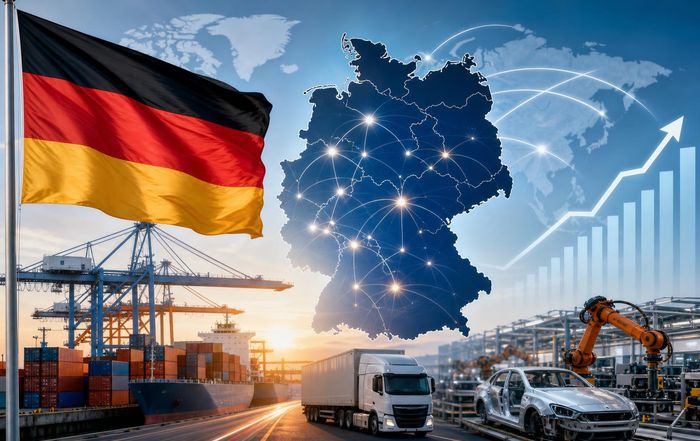
Germany's Trade Outlook and Business Confidence in 2026
Germany enters 2026 at a pivotal juncture for its export-oriented economic model, with shifting global trade patterns, persistent geopolitical tensions, and a rapidly evolving technological landscape reshaping the outlook for its corporations, Mittelstand firms, and financial sector. For readers of FinancialDailys.com, whose interests span global finance, markets, investing, and cross-border trade, Germany's trajectory matters not only because it remains Europe's largest economy, but also because its industrial and technological choices often foreshadow broader trends across the continent and beyond.
The Post-Pandemic Reset of the German Export Model
Germany's trade outlook in 2026 cannot be understood without recognizing how profoundly the COVID-19 pandemic and the subsequent energy and supply chain crises forced a reassessment of its long-standing export engine. For decades, German prosperity was anchored in a powerful combination of industrial excellence, strong integration into the European single market, and robust trade ties with China, the United States, and other major economies. According to data from the World Trade Organization, Germany has consistently ranked among the world's leading merchandise exporters, with automotive, machinery, chemicals, and high-end manufacturing equipment at the core of its export basket.
The shocks of the early 2020s, including supply bottlenecks, soaring energy prices following Russia's invasion of Ukraine, and tightening monetary policy in advanced economies, exposed vulnerabilities in this model. German manufacturers, especially in energy-intensive sectors such as chemicals and metals, had to navigate a sharp deterioration in cost competitiveness. At the same time, global demand became more volatile, and trade tensions between major powers complicated long-established supply chains. As a result, Germany's export growth slowed, and concerns about de-industrialization gained prominence among policymakers, business leaders, and investors who follow developments on platforms such as FinancialDailys Markets.
By 2026, however, the picture is more nuanced. While headline trade growth remains modest compared with the pre-pandemic decade, many German firms have adjusted by diversifying markets, accelerating digitalization, and investing in energy efficiency. The International Monetary Fund notes that Germany's current account surplus has narrowed from its peak, reflecting both softer external demand and stronger domestic investment, but the country still maintains a substantial export surplus, indicating that its industrial core remains intact even as it adapts to new realities.
Business Confidence: Between Caution and Strategic Optimism
Business confidence in Germany, as captured by indicators such as the ifo Business Climate Index published by the ifo Institute, has oscillated between caution and guarded optimism over the past few years. Elevated energy costs, higher interest rates, and regulatory uncertainty have weighed on sentiment, particularly in construction and traditional manufacturing. Yet, there is also a growing sense among corporate leaders that the structural transitions underway-toward green technologies, digital infrastructure, and resilient supply chains-present opportunities for those able to reposition early.
Executives in export-oriented sectors report that order books from the United States and parts of Asia remain relatively healthy, even as demand from China has become less predictable. The United States, supported by industrial and climate legislation such as the Inflation Reduction Act, has emerged as a key destination for German capital goods and clean-tech components, while markets in Southeast Asia and India are increasingly important in corporate strategies that seek to reduce overreliance on any single large trading partner. Analysts and investors tracking these shifts through FinancialDailys Investing coverage see them as central to the future earnings profile of Germany's listed multinationals.
At the same time, sentiment surveys by organizations such as the European Commission show that German business expectations are heavily shaped by regulatory clarity on climate policy, industrial support schemes, and digital infrastructure. Companies are cautiously optimistic where policy frameworks are stable and predictable, but they remain wary of sudden shifts in taxation, energy levies, or reporting obligations that could undermine long-term investment plans.
Energy Transition, Competitiveness, and Trade Dynamics
The energy transition is arguably the single most important structural factor influencing Germany's trade outlook and business confidence in 2026. The accelerated phase-out of Russian pipeline gas forced Germany to reconfigure its energy mix rapidly, relying more on liquefied natural gas imports, renewables, and efficiency measures. While this shift has improved energy security, it has also raised questions about long-term price competitiveness for the country's heavy industry.
Reports from the International Energy Agency highlight that Germany has made notable progress in expanding renewable capacity, especially wind and solar, and in improving grid integration across Europe. Over time, these investments are expected to lower marginal energy costs and support electrification of industrial processes, which could strengthen the competitiveness of German exports in sectors such as green steel, low-carbon chemicals, and battery technology. However, the transition period remains challenging, and many firms still face higher energy bills compared with some global competitors.
For export-oriented companies, the interplay between decarbonization and trade is increasingly strategic. Access to low-carbon energy and the ability to document the carbon footprint of products are becoming critical differentiators in global markets, particularly in light of instruments such as the EU's Carbon Border Adjustment Mechanism. Businesses that can credibly demonstrate sustainable production practices are better positioned to win contracts from customers that prioritize environmental criteria in procurement. Readers interested in how these trends intersect with corporate strategy can explore more on FinancialDailys Sustainability, where the implications of green regulation for trade and profitability are examined in depth.
Shifting Trade Partners and Geopolitical Realignment
The geopolitical environment in 2026 is more fragmented than in the era of hyper-globalization that defined the early 2000s. Germany, as a central hub in European and global value chains, has been particularly exposed to the reconfiguration of trade relationships. While the United States and the European Union remain closely aligned on many strategic issues, including technology controls and sanctions policy, there are also areas of tension, such as subsidies and industrial policy, that affect German exporters.
China remains a critical trading partner for Germany, both as a market for high-value goods and as a supplier of intermediate inputs. Yet, the relationship has become more complex. The European Council on Foreign Relations and other think tanks have documented a shift in European attitudes toward China, emphasizing "de-risking" rather than outright decoupling. German companies are responding by diversifying their supply chains, increasing investments in Southeast Asia, India, and Mexico, and reassessing the balance between local production and exports. This diversification is visible in trade data from the OECD, which show growing trade flows between Germany and emerging economies beyond its traditional partners.
For investors and corporate strategists who follow developments via FinancialDailys World section, the key question is how Germany can maintain its export strength in a world where trade is increasingly shaped by strategic considerations, industrial policy, and security concerns. The answer appears to lie in a more granular and flexible approach to market selection, supply chain design, and risk management, rather than in a simple pivot away from any single country.
The Role of the European Union and Single Market Integration
Germany's trade outlook is inseparable from the broader trajectory of the European Union. The EU's single market, regulatory framework, and trade agreements provide the foundation for German exporters, who benefit from frictionless access to other member states and from the bloc's collective bargaining power in global trade negotiations. The European Commission's trade policy has continued to prioritize diversification of trade agreements, including with countries in the Indo-Pacific, Latin America, and Africa, which in turn expands opportunities for German firms.
Within the euro area, monetary policy normalization and the gradual unwinding of unconventional measures by the European Central Bank have implications for financing conditions, exchange rates, and investment decisions. A stable euro and predictable interest rate path can support business confidence by reducing uncertainty around capital costs and currency risk. However, tighter financial conditions compared with the ultra-low interest rate era also mean that companies must be more selective in their investment choices, focusing on projects with clear productivity or strategic benefits.
Germany's position as a leading voice in EU economic governance also means that its domestic policy debates-on fiscal rules, industrial strategy, and climate targets-have outsized influence on the broader European business environment. Readers interested in the interaction between national and European policy frameworks can find additional context in FinancialDailys Economy coverage, which frequently analyzes how EU-level decisions filter through to corporate balance sheets and trade flows.
Sectoral Perspectives: Autos, Machinery, Chemicals, and Tech
A sector-by-sector analysis reveals that Germany's trade outlook is far from uniform. The automotive industry, long the flagship of German exports, is undergoing a profound transformation as electric vehicles, software-defined architectures, and autonomous driving technologies reshape global competition. Major German automakers and suppliers are investing heavily in battery plants, software platforms, and partnerships with technology firms, while also facing intense competition from U.S., Chinese, and other European manufacturers. Industry data from the International Organization of Motor Vehicle Manufacturers underscore the scale of the transition, with electric and hybrid vehicles steadily gaining market share in key export destinations.
The machinery and engineering sector, another pillar of German exports, is somewhat less exposed to consumer preference shifts but highly sensitive to global investment cycles. Demand for advanced manufacturing equipment, robotics, and industrial automation solutions is supported by reshoring, nearshoring, and the broader trend toward Industry 4.0. German firms that can integrate artificial intelligence, data analytics, and connectivity into their offerings are well placed to capture value from this shift. Readers can explore how these trends intersect with broader technology and innovation themes in FinancialDailys Tech section, where the digitalization of industry is a recurring theme.
The chemicals sector, traditionally a major exporter, faces a more challenging environment due to high energy costs and stringent environmental regulations, but it also stands to benefit from demand for advanced materials, battery components, and green chemistry solutions. Industry analyses by Cefic, the European Chemical Industry Council, highlight both the risks and the opportunities as companies adjust product portfolios and invest in low-carbon technologies.
Meanwhile, Germany's technology and startup ecosystem, while smaller in scale than those of the United States or China, has been gaining momentum, particularly in areas such as enterprise software, climate tech, and industrial AI. The country's strong engineering base, combined with growing venture capital interest and supportive EU initiatives, has started to generate a pipeline of high-growth companies whose business models are inherently global. The development of this ecosystem is closely followed by readers of FinancialDailys Startups coverage, who recognize that the next generation of export champions may emerge as much from software and digital services as from traditional manufacturing.
Labor Markets, Skills, and the Confidence of the Mittelstand
Germany's famed Mittelstand-the network of small and medium-sized, often family-owned firms that form the backbone of its export strength-faces a dual challenge in 2026: demographic change and a rapidly evolving skills landscape. With an aging population and tight labor markets, many companies struggle to recruit and retain workers with the technical and digital competencies required for modern production and international expansion. Reports from the OECD Skills Outlook emphasize that continuous training and upskilling are essential for maintaining competitiveness in advanced economies, and Germany is no exception.
Business confidence among Mittelstand firms is closely tied to their ability to attract talent, invest in automation, and expand internationally. Many of these companies operate in niche markets where they enjoy strong global positions, but they must adapt to new technologies and customer expectations. Cross-border e-commerce, digital marketing, and data-driven service offerings are increasingly important even for traditional industrial suppliers. For professionals and executives considering career moves or skills development in this changing environment, FinancialDailys Careers section provides insights into evolving labor market demands and the competencies that will be most valued in export-oriented sectors.
Immigration policy, vocational training reforms, and efforts to increase labor force participation-particularly among women and older workers-are thus not only social policy issues but also central to Germany's trade outlook. A workforce that can support innovation, internationalization, and digital transformation is a prerequisite for sustained export growth and corporate confidence.
Financial System, Banking, and Trade Finance
The health of Germany's financial system plays a critical role in shaping both trade outcomes and business sentiment. German banks, including large institutions and regional Sparkassen, are central to providing trade finance, working capital, and investment funding to exporters. While the sector has undergone significant restructuring and regulatory tightening since the global financial crisis, it continues to face profitability pressures from competition, digital disruption, and evolving capital requirements.
The Bank for International Settlements has noted that global trade finance gaps remain an obstacle for smaller firms in many economies, and Germany is not immune to these challenges, particularly for Mittelstand companies seeking to expand into new markets. However, the combination of traditional relationship banking and emerging fintech solutions is gradually improving access to financing tools such as supply chain finance, export credit insurance, and digital letters of credit. Readers who follow FinancialDailys Banking coverage can observe how regulatory changes, digital innovation, and consolidation in the financial sector affect the cost and availability of credit for export-oriented businesses.
Capital markets also influence trade performance indirectly, as listed German companies rely on equity and bond markets to fund large-scale investments in capacity, research and development, and international expansion. The performance of German equities, particularly in sectors such as autos, industrials, and technology, is closely watched by investors through FinancialDailys Stocks section, where earnings trends and guidance provide valuable signals about corporate confidence in future demand.
Real Estate, Infrastructure, and the Logistics Backbone
Germany's ability to sustain its trade performance depends not only on corporate strategies and macroeconomic policy but also on the quality and capacity of its physical infrastructure. Ports, railways, highways, and logistics hubs form the backbone of the export machine, and in recent years there has been growing recognition that parts of this infrastructure require modernization to keep pace with global competitors. Analyses by the World Bank on logistics performance indices have highlighted both strengths and bottlenecks in Germany's transport and customs systems.
Industrial and logistics real estate markets have seen robust demand as companies seek to shorten supply chains, increase inventories for resilience, and expand e-commerce operations. This has implications for property values, investment returns, and regional development patterns. Readers interested in how these dynamics intersect with broader real estate trends can find relevant analysis in FinancialDailys Property section, where the interplay between logistics demand, industrial clusters, and infrastructure investment is frequently explored.
Public investment in rail, digital infrastructure, and port modernization is likely to be a key determinant of Germany's competitiveness over the coming decade. Efficient, sustainable logistics networks not only reduce costs and emissions but also enhance the reliability and speed of exports, which are increasingly important differentiators in global value chains that prioritize just-in-time and just-in-case strategies.
Global Trade Architecture, Sustainability, and Regulatory Complexity
Germany's trade outlook in 2026 is also shaped by the evolving global trade architecture, where multilateral institutions, regional agreements, and unilateral measures coexist in a complex and sometimes conflicting framework. The World Bank's Global Economic Prospects and similar analyses highlight that trade growth has slowed relative to the pre-2008 era, with more frequent use of tariffs, export controls, and industrial subsidies. For German firms, navigating this environment requires sophisticated compliance capabilities and proactive engagement with regulators and industry associations.
Sustainability has become a central dimension of trade policy and corporate strategy. Environmental, social, and governance considerations are now embedded in many trade agreements and corporate procurement standards. German exporters must comply not only with EU regulations on due diligence, deforestation, and human rights in supply chains but also with varying requirements in markets such as the United States, the United Kingdom, and Asia-Pacific economies. Learning how to align business models with sustainable trade practices is therefore a critical competence, and readers can learn more about sustainable business practices through resources from organizations such as the United Nations Environment Programme.
This regulatory complexity can weigh on business confidence, particularly for smaller firms with limited compliance resources, but it also creates opportunities for those able to differentiate through transparency, certification, and innovation in sustainable products and processes. As FinancialDailys Business coverage often emphasizes, the intersection of regulation, sustainability, and competitiveness will define the next phase of globalization, and Germany is at the forefront of this transition.
Outlook: Strategic Adaptation and the Role of Informed Investors
Looking ahead, Germany's trade outlook and business confidence in 2026 are characterized by a delicate balance between structural headwinds and emerging opportunities. The country faces undeniable challenges: demographic pressures, heightened energy costs during the transition phase, intensifying global competition, and a more fragmented geopolitical landscape. Yet it also possesses substantial strengths, including a deep industrial base, strong institutions, advanced research capabilities, and an increasingly dynamic technology and startup ecosystem.
For the global audience of FinancialDailys.com, which spans investors, executives, policymakers, and professionals across North America, Europe, Asia, Africa, and South America, Germany's trajectory offers both risks and opportunities. Portfolio allocations to German equities and bonds, strategic decisions about supply chain locations, and assessments of sector-specific prospects in autos, machinery, chemicals, technology, and logistics all depend on a nuanced understanding of how the country is adapting to a transformed global economy. Readers can track these developments across FinancialDailys Finance, Trade, and the broader homepage, where Germany's role in global markets is a recurring theme.
Ultimately, Germany's success in sustaining its export strength and restoring robust business confidence will hinge on its ability to execute a coherent strategy that aligns energy transition, digital transformation, labor market reform, and trade diversification. If policymakers, corporate leaders, and financial institutions can coordinate effectively, the country is well placed to remain a central node in global trade and investment flows. For those who follow these developments closely, Germany in 2026 is not merely a case study in adaptation but a bellwether for the future of advanced, export-oriented economies in a more complex and contested global order.
