
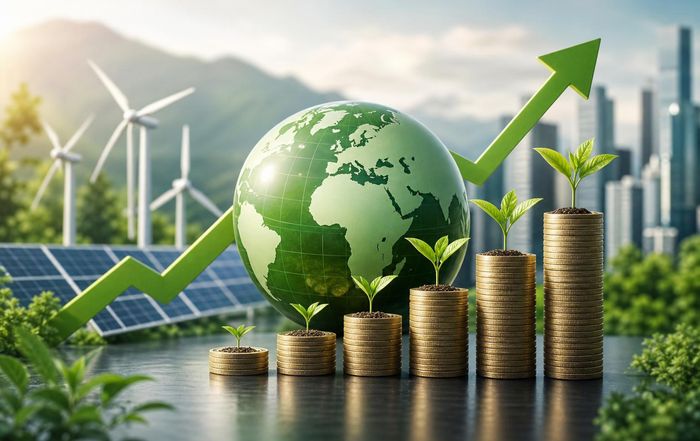
Green Investment Trends Across Global Markets
The New Center of Gravity in Global Capital
Ok wow finally, green investment has moved from the periphery of the financial system to its center, reshaping how capital is allocated, how risk is priced, and how performance is measured across advanced and emerging economies. For the community here, which typically includes institutional investors, corporate leaders, policymakers, and sophisticated retail investors, understanding the evolving architecture of sustainable finance is no longer a matter of corporate social responsibility; it is a prerequisite for navigating modern finance, markets, and business strategy.
What began a decade ago as a thematic niche focused largely on renewable energy and exclusionary screens has become a multi-trillion-dollar ecosystem encompassing climate transition strategies, biodiversity and natural capital, social impact, and increasingly sophisticated environmental, social, and governance (ESG) integration. From the United States and Europe to Asia-Pacific, Africa, and Latin America, capital flows are being redirected by regulation, technology, consumer preference, and the rapidly escalating physical and transition risks of climate change. Readers can see these dynamics reflected daily across global market coverage and economy-focused analysis on Financialdailys.com, where green finance is now a recurring lens rather than a specialist category.
From ESG Niche to Mainstream Capital Allocation
The mainstreaming of green investment has been driven by a convergence of regulatory, economic, and technological forces. Large asset managers such as BlackRock, Vanguard, and State Street Global Advisors have embedded ESG considerations into their core processes, while sovereign wealth funds in Norway, Singapore, and the Middle East have adopted climate-aligned mandates that influence capital flows worldwide. As global sustainable investment reports from organizations such as the UN Principles for Responsible Investment show, ESG integration is now standard practice for many institutional investors in Europe, North America, and parts of Asia, even if methodologies and levels of ambition still vary significantly.
Green investment is no longer limited to specialist funds labeled as "sustainable" or "impact." Climate risk is increasingly treated as financial risk, a view reinforced by central banks and supervisors coordinated through the Network for Greening the Financial System, whose work on climate scenario analysis has helped financial institutions embed climate considerations into stress testing and risk management. Investors seeking to understand how these shifts affect asset pricing and portfolio construction increasingly look to resources like the International Monetary Fund and Bank for International Settlements, which regularly analyze climate-related financial risks and their macroeconomic implications.
For readers of Financialdailys.com, the key development is that ESG and green themes are now affecting core asset classes featured in investing coverage, from stocks and bonds to property and infrastructure, rather than sitting in a separate impact investing silo.
Regulatory Convergence and Fragmentation
Regulation remains the primary structural driver of green investment trends, especially in the United States, United Kingdom, and European Union, but also increasingly in Asia-Pacific and major emerging markets. The EU Sustainable Finance Disclosure Regulation (SFDR) and the EU Taxonomy have set a global benchmark for defining sustainable economic activities, influencing capital allocation far beyond Europe's borders. Asset managers operating in Germany, France, Italy, Spain, and the Netherlands must now classify products according to sustainability characteristics and disclose how they integrate ESG factors, which has led to a re-labeling of funds and a more disciplined approach to green claims.
In the United States, the regulatory environment has been more contested, with political debates around ESG in certain states contrasted by a strong push from federal agencies for climate-related disclosure. The move by the U.S. Securities and Exchange Commission toward enhanced climate risk reporting has brought American markets closer to the global baseline being shaped by the International Sustainability Standards Board, whose standards aim to harmonize sustainability reporting worldwide. Investors seeking to understand these evolving rules and their impact on corporate valuations increasingly consult detailed guidance from bodies such as the IFRS Foundation and the Task Force on Climate-related Financial Disclosures.
In the United Kingdom, Switzerland, and the broader European region, mandatory climate reporting, stewardship codes, and green bond standards are pushing asset owners and managers to demonstrate measurable progress on decarbonization. Meanwhile, jurisdictions such as Singapore, Japan, and South Korea are implementing taxonomies and disclosure frameworks that reflect regional priorities yet remain interoperable with global standards. Readers following regulatory developments on banking and financial policy can observe a gradual but steady trend toward convergence on core climate metrics, even as political and legal debates continue.
The Evolution of Green Bonds, Sustainability-Linked Debt, and Climate Finance
Green bonds and related instruments have become one of the most visible pillars of sustainable finance. Over the last decade, issuance of green, social, sustainability, and sustainability-linked bonds has grown from a niche market to a substantial segment of global fixed income, with sovereigns, supranationals, corporates, and financial institutions all tapping investor demand for labeled instruments. Frameworks developed by the International Capital Market Association and oversight by organizations such as the Climate Bonds Initiative have helped standardize definitions and reassure investors that proceeds are aligned with environmental objectives.
In Europe, countries including Germany, France, and Italy have become major sovereign issuers of green debt, using the market to finance renewable energy, energy efficiency, and transport infrastructure. In the United States and Canada, municipal and state-level green bonds have played a critical role in financing climate-resilient infrastructure and clean transport, while Australia and New Zealand have leveraged green debt markets to support energy transition and sustainable agriculture. In Asia, China remains one of the largest green bond issuers, with evolving standards that increasingly align with international taxonomies, while Japan and South Korea are using sustainable debt to support industrial decarbonization and hydrogen strategies.
Sustainability-linked bonds and loans, whose pricing is tied to the achievement of specific ESG targets rather than the use of proceeds, have added a new dimension to corporate finance, especially for companies in hard-to-abate sectors that cannot yet classify all activities as green but are committing to transition pathways. As guidance from the OECD on sustainable finance highlights, these instruments can create powerful incentives when targets are credible and penalties for underperformance are meaningful, but they also raise concerns about greenwashing when metrics are weak or poorly disclosed.
For investors tracking fixed income opportunities through platforms like Financialdailys.com, which regularly cover global finance and capital markets, the key trend is the integration of labeled debt into mainstream portfolios, with credit analysis increasingly incorporating climate transition risk, regulatory exposure, and physical vulnerability alongside traditional financial metrics.
Regional Dynamics: United States, Europe, and Asia-Pacific
Regional variations in policy, market structure, and energy mix have produced distinct green investment trajectories across major economies. In the United States, federal legislation such as the Inflation Reduction Act has catalyzed unprecedented investment in clean energy, electric vehicles, and grid modernization, with generous tax incentives attracting both domestic and foreign capital. Reports from the U.S. Department of Energy and independent think tanks illustrate how this policy framework is reshaping industrial geography, particularly in states that are becoming hubs for battery manufacturing, solar and wind component production, and green hydrogen.
In Europe, the European Green Deal and associated funding mechanisms continue to drive large-scale investment in renewable energy, building renovation, and sustainable mobility. The European Commission has positioned climate neutrality as a core economic strategy, influencing everything from competition policy to trade and industrial policy. Countries such as Germany and Denmark remain leaders in wind power, while Spain and Italy are expanding solar capacity, and France continues to rely heavily on nuclear power as a low-carbon baseload source. Green investment in Europe is also deeply intertwined with energy security concerns, particularly following supply disruptions and geopolitical tensions that have underscored the vulnerabilities of fossil fuel dependence.
In Asia-Pacific, green investment trends reflect a complex interplay between rapid economic growth, industrialization, and climate commitments. China, the world's largest emitter and a dominant player in solar, wind, and battery manufacturing, is simultaneously expanding renewable capacity and managing the legacy of coal dependence. Japan and South Korea are pursuing net-zero targets with strategies that combine renewable energy, hydrogen, nuclear, and carbon capture, while Singapore is positioning itself as a regional green finance hub with sophisticated regulatory frameworks and taxonomies. Emerging markets such as Thailand, Malaysia, and Indonesia are increasingly attracting climate finance for renewable energy and nature-based solutions, although policy and governance risks remain a concern for international investors.
Readers interested in cross-border capital flows and the intersection of climate policy with world trade and investment can observe how these regional strategies are influencing supply chains, trade patterns, and competitive advantage in sectors ranging from automotive and semiconductors to critical minerals and clean technology.
Sectoral Shifts: Energy, Property, and Technology
Sectoral analysis reveals where green investment is most concentrated and where transition risks are most acute. The energy sector remains the focal point, with renewable power generation, energy storage, and grid infrastructure attracting substantial capital. Data from the International Energy Agency underscores the rapid decline in the levelized cost of solar and wind power, which has transformed them into cost-competitive or even cheapest sources of new electricity generation in many regions. At the same time, investment in oil and gas remains significant, creating a complex landscape in which investors must balance short- and medium-term energy security with long-term decarbonization commitments.
The property sector is undergoing a profound transformation as investors, developers, and regulators respond to both climate mitigation and adaptation imperatives. Energy efficiency standards, building codes, and disclosure requirements in markets such as the United States, United Kingdom, Germany, and Australia are driving retrofits and green building certifications, while insurers and lenders are reassessing the risk profile of assets exposed to flooding, wildfires, storms, and heat stress. Readers following property and real estate trends on Financialdailys.com will recognize that green building performance is increasingly reflected in valuation, rental premiums, and financing conditions, making sustainability a core component of real estate investment analysis.
Technology is both an enabler and a beneficiary of green investment trends. Clean energy technologies, electric vehicles, smart grids, and energy-efficient data centers are reshaping the innovation landscape, with companies in Silicon Valley, Europe, China, South Korea, and Japan competing for leadership in hardware, software, and integrated solutions. Digitalization, artificial intelligence, and advanced analytics are improving the measurement, reporting, and verification of ESG performance, while also enabling more efficient energy management and resource optimization. For investors tracking tech sector developments, the convergence of digital and green transformations represents one of the defining investment themes of the decade.
The Role of Startups, Private Markets, and Venture Capital
Beyond listed equities and public debt, green investment trends are reshaping private markets, where startups and growth-stage companies are developing technologies and business models that could define the next generation of climate solutions. Venture capital and private equity funds in North America, Europe, and Asia are allocating increasing capital to climate tech, spanning areas such as battery innovation, carbon capture and storage, sustainable agriculture, alternative proteins, and circular economy platforms. Reports from the World Economic Forum and other global institutions highlight how this wave of innovation is creating new ecosystems and partnerships between startups, incumbents, and public sector actors.
For emerging climate tech ventures in Germany, France, Sweden, Norway, Singapore, and Australia, regulatory support, public funding, and corporate venture capital are critical catalysts that help bridge the gap between early-stage innovation and commercial scale. At the same time, investors must navigate high technological, regulatory, and market risks, requiring deep technical expertise and robust due diligence. Financialdailys.com regularly covers this intersection of innovation and capital in its startups and entrepreneurship section, where green and climate-focused ventures are increasingly prominent.
Private infrastructure funds and real assets investors are also expanding their exposure to renewable energy, grid infrastructure, and sustainable transport, often in partnership with public entities. In emerging markets across Africa, South America, and parts of Asia, blended finance structures that combine public, philanthropic, and private capital are being used to de-risk investments in clean energy, water infrastructure, and climate adaptation. Institutions such as the World Bank and regional development banks play a vital role in structuring these deals and providing guarantees that attract institutional investors seeking both impact and yield.
Measuring Impact, Managing Risk, and Avoiding Greenwashing
As green investment has scaled, questions of measurement, verification, and integrity have become central to its credibility and long-term viability. Investors, regulators, and civil society organizations are increasingly focused on whether capital labeled as sustainable is actually delivering meaningful environmental and social outcomes. This has led to greater scrutiny of ESG ratings, methodologies, and data quality, as well as a push for more standardized metrics and assurance.
The proliferation of ESG data providers and frameworks has created both opportunities and challenges. While investors now have access to more information than ever, inconsistencies between ratings, gaps in disclosure, and methodological opacity can hinder comparability and decision-making. Research from institutions such as the Harvard Business School and specialized think tanks underscores the need for more transparent and robust approaches to materiality, scenario analysis, and impact measurement. At the same time, regulators in Europe, the United States, and Asia are moving to crack down on greenwashing, with enforcement actions and guidance aimed at ensuring that product labels and marketing claims are aligned with underlying practices.
For sophisticated investors who follow stocks and equity markets through Financialdailys.com, this environment demands a more nuanced approach to ESG integration, emphasizing fundamental analysis, engagement with company management, and a clear understanding of how climate and sustainability factors affect cash flows, cost of capital, and strategic positioning. It also underscores the importance of stewardship, as large shareholders increasingly use voting and engagement to push companies toward credible net-zero strategies and transparent transition plans.
Consumer Behavior, Workforce Expectations, and Corporate Strategy
Green investment trends are not driven solely by regulators and institutional investors; they also reflect changing consumer behavior and workforce expectations across North America, Europe, Asia, and beyond. Consumers in markets such as the United States, United Kingdom, Germany, Canada, and Japan are increasingly attentive to the environmental impact of the products and services they purchase, from energy and transport to food and fashion. Surveys and analysis from organizations like the OECD and independent research institutes show a growing willingness in many demographics to favor sustainable brands, provided that claims are credible and pricing is competitive.
At the same time, employees-particularly younger cohorts in Europe, North America, and parts of Asia-Pacific-are placing greater emphasis on working for organizations that align with their values and demonstrate a serious commitment to sustainability. This trend is reshaping talent strategies, leadership development, and organizational culture, as companies recognize that their ESG performance can affect their ability to attract and retain top talent. For readers following careers and workplace trends on Financialdailys.com, the linkage between corporate sustainability performance and employer brand has become increasingly evident.
These shifts in consumer and employee expectations feed back into corporate strategy and capital allocation decisions. Boards and executive teams across sectors-from financial services and manufacturing to technology and retail-are integrating sustainability into core strategy, risk management, and product development, rather than treating it as a separate corporate social responsibility initiative. This integration is reflected in the growing prevalence of sustainability-linked executive compensation schemes, climate scenario analysis in strategic planning, and cross-functional governance structures that embed ESG considerations across the enterprise.
Trade, Geopolitics, and the Global Green Race
Green investment trends are increasingly intertwined with trade policy and geopolitics, as countries compete for leadership in clean technologies and seek to secure access to critical materials. Policies such as the EU Carbon Border Adjustment Mechanism and various industrial strategies in the United States, China, Japan, and South Korea are reshaping global value chains and raising complex questions about trade rules, competitiveness, and climate justice. Analysts tracking global trade and economic policy can see how climate measures are becoming a central feature of international economic relations.
The race to dominate supply chains for solar panels, wind turbines, batteries, and green hydrogen equipment has intensified strategic competition between major powers, while also creating opportunities for resource-rich countries in Africa, South America, and Asia. However, this competition also raises concerns about environmental and social standards in mining and processing of critical minerals such as lithium, cobalt, and rare earths, making responsible sourcing and robust ESG due diligence essential for investors and companies alike. Institutions such as the International Energy Agency and the World Resources Institute provide detailed analysis of these supply chain dynamics and their implications for the global energy transition.
For the global audience of Financialdailys.com, spanning the United States, United Kingdom, Germany, Canada, Australia, France, Italy, Spain, Netherlands, Switzerland, China, Sweden, Norway, Singapore, Denmark, South Korea, Japan, Thailand, Finland, South Africa, Brazil, Malaysia, and New Zealand, these trends underscore that green investment is not merely a domestic policy issue but a central axis of international economic competition and cooperation.
Outlook: The Next Phase of Green Investment
The trajectory of green investment will be shaped by three interlocking forces: the accelerating physical impacts of climate change, the evolution of policy and regulation, and the pace of technological innovation. Physical risks-from extreme weather events in North America and Europe to heatwaves and flooding in Asia and Africa-are already affecting asset values, supply chains, and insurance markets, reinforcing the financial materiality of climate risk. Policy signals, while uneven, are broadly moving toward greater transparency, stronger standards, and more ambitious decarbonization targets, even as political backlash and geopolitical tensions create periodic uncertainty.
Technological progress, particularly in energy storage, grid management, low-carbon industrial processes, and digital optimization, will determine the speed and cost of the transition, influencing both the risk of stranded assets and the upside potential of climate solutions. For investors, corporates, and policymakers who rely on this site for business, sustainability, and global economy coverage, the critical task is to move beyond viewing green investment as a thematic overlay and instead recognize it as a foundational element of capital markets, corporate strategy, and economic policy.
In this new landscape, experience, expertise, authoritativeness, and trustworthiness become essential differentiators. Investors must develop the capacity to interrogate ESG data, understand sector-specific transition pathways, and engage constructively with companies and policymakers. Corporates must demonstrate credible, transparent strategies backed by measurable progress rather than aspirational targets alone. Regulators and standard-setters must balance ambition with practicality, ensuring that frameworks are rigorous yet workable across diverse markets and sectors.
Green investment trends across global markets reflect a financial system in transition-one that is still grappling with inconsistencies and challenges, yet is unmistakably moving toward a future in which sustainability is embedded in the core of economic decision-making. For the global business and investment community that turns to Financialdailys.com as a trusted guide, the imperative is clear: integrate green finance into every dimension of analysis, from portfolio construction and risk management to corporate strategy and policy engagement, because the line between "green" and "mainstream" finance is rapidly disappearing.
