
How Market Cycles Affect Investment Decisions in 2026
Understanding Market Cycles in a Data-Driven Era
By 2026, the language of market cycles has become as central to global investing as earnings, cash flow and valuation multiples. For readers of FinancialDailys.com, whose focus spans finance, markets, investing, business, the economy and sustainability, the ability to interpret and respond to market cycles is no longer a specialist skill reserved for institutional desks; it is a core competency that shapes portfolio construction, risk management and strategic planning across regions from the United States and Europe to Asia, Africa and South America.
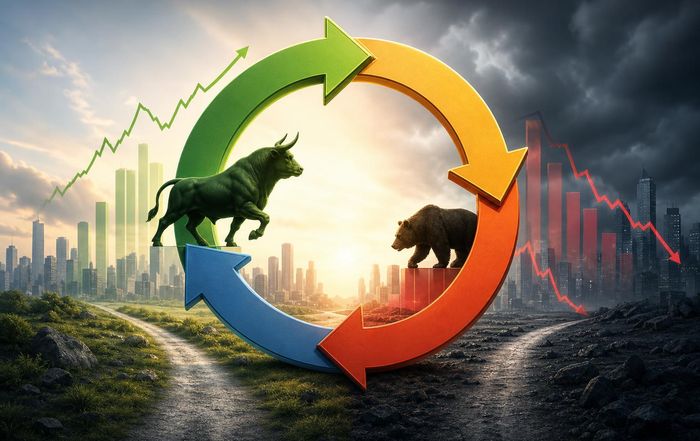
At its core, a market cycle describes the recurring pattern of expansion, peak, contraction and recovery that characterizes financial markets over time. These cycles can be observed in equities, bonds, real estate, credit and even alternative assets, and while no two cycles are identical, their underlying drivers-monetary policy, corporate profitability, investor sentiment, liquidity conditions and macroeconomic trends-remain broadly consistent. Investors who understand how these forces interact are better placed to align their decisions with prevailing conditions rather than react emotionally to short-term volatility. For a deeper grounding in macroeconomic indicators that underpin these cycles, readers can review the latest global data from sources such as the International Monetary Fund and World Bank, which have become essential reference points for cycle-aware investors.
In 2026, the maturation of data analytics, machine learning and real-time market surveillance has not eliminated market cycles, but it has made them more complex and, at times, more compressed, with capital flowing rapidly across borders and asset classes. Nevertheless, the fundamental lesson remains unchanged: understanding where markets are in the cycle, even approximately, can materially influence asset allocation, sector rotation and risk tolerance, and it is this intersection of theory and practice that increasingly defines the editorial perspective at FinancialDailys.com.
The Anatomy of a Market Cycle: From Expansion to Recovery
A comprehensive view of market cycles begins with recognizing that they are closely linked to the broader business cycle, although financial markets often move ahead of economic data. During the expansion phase, economic growth accelerates, corporate earnings improve, unemployment falls and credit conditions are generally benign. Equity valuations tend to rise as investors price in stronger future cash flows, while credit spreads narrow in response to lower perceived default risk. Central banks such as the Federal Reserve, the European Central Bank and the Bank of England typically maintain accommodative monetary policy early in the expansion, supporting risk assets. Investors who understand this dynamic often tilt portfolios toward cyclical sectors and growth-oriented companies as they monitor indicators from institutions like the OECD that track global economic momentum.
As the cycle matures and approaches its peak, growth remains positive but begins to decelerate, inflation pressures may build and central banks start to normalize or tighten policy. Valuations can become stretched as optimism persists, even while leading indicators, such as purchasing managers' indices published by organizations like S&P Global, suggest that momentum is slowing. This is often a phase in which complacency can set in, with investors underestimating the probability of a downturn. Experienced market participants, particularly those following detailed sector and macro coverage on platforms such as FinancialDailys Markets, tend to reassess risk exposures, rebalance portfolios and gradually increase allocations to defensive assets.
The contraction phase, often associated with bear markets or corrections, is characterized by declining economic activity, falling corporate profits and rising unemployment. Risk assets sell off, volatility spikes and liquidity can dry up in more speculative segments of the market. While this phase can be uncomfortable, it also resets valuations and creates opportunities for disciplined investors with robust risk frameworks. Historical analyses by organizations such as MSCI and Vanguard, accessible via their respective research portals, highlight that the most severe long-term investment mistakes often occur when investors capitulate at or near the bottom of the cycle. Instead, those who rely on structured approaches, as discussed in FinancialDailys Investing, often use this phase to accumulate high-quality assets at discounted prices.
Finally, the recovery phase marks the transition from contraction back to expansion. Markets often begin to rebound before economic data improves meaningfully, as investors anticipate policy support, earnings stabilization and renewed growth. Central banks may cut interest rates, governments consider fiscal stimulus and credit conditions slowly normalize. Equity markets usually recover faster than labor markets, and this disconnect can be confusing for less experienced investors. However, for those who track leading indicators from sources such as The Conference Board and monitor forward-looking guidance from major corporations, early signs of recovery can justify a gradual shift back into risk assets, particularly sectors poised to benefit from cyclical upturns.
Behavioral Finance: Why Investors Misread Market Cycles
Even with abundant data and sophisticated analytics, many investors misinterpret market cycles due to behavioral biases that are deeply rooted in human psychology. Overconfidence, herd behavior, loss aversion and recency bias all contribute to suboptimal decision-making, particularly during turning points in the cycle. In expansions, investors may extrapolate recent gains indefinitely, underestimating the probability of mean reversion and ignoring valuation signals. During contractions, the pain of losses can lead to emotionally driven selling, even when fundamentals suggest that long-term prospects remain intact.
Research from institutions such as the CFA Institute and behavioral finance studies published by Nobel laureates like Daniel Kahneman have demonstrated that these biases are persistent and often strongest when markets are most volatile. This is one reason why professional investors and wealth managers increasingly rely on systematic processes, pre-defined asset allocation ranges and disciplined rebalancing strategies rather than ad hoc decisions. Readers of FinancialDailys Finance will recognize that a key element of experience and expertise in investing lies not only in understanding macro and micro drivers, but also in designing processes that mitigate the impact of emotional reactions.
Technology has amplified some of these behavioral dynamics. The rise of social media, real-time news and algorithmic trading has increased the speed at which narratives spread, sometimes creating feedback loops that detach prices from fundamentals. Episodes such as the meme-stock surges of the early 2020s illustrated how herding and speculation can dominate short-term price action, particularly among retail investors. Regulatory bodies such as the U.S. Securities and Exchange Commission, whose updates can be followed on SEC.gov, have responded with increased scrutiny of market structure and investor protection, but ultimately, individual and institutional investors must build internal disciplines that recognize the emotional pressures inherent in each phase of the market cycle.
Central Banks, Inflation and the New Interest-Rate Regime
In 2026, one of the most significant changes affecting market cycles is the evolution of the global interest-rate environment following the inflation shocks of the early 2020s. After more than a decade of ultra-low or even negative rates in regions such as the euro area, central banks were forced to tighten aggressively to counter persistent inflation driven by supply chain disruptions, energy price volatility and labor market constraints. As a result, the cost of capital has structurally increased compared with the pre-pandemic era, altering the dynamics of each phase of the market cycle.
For investors, this shift means that the relationship between equities and bonds, and between growth and value stocks, has evolved. Higher discount rates reduce the present value of long-duration cash flows, which can pressure valuations of high-growth companies, particularly in sectors such as technology and biotechnology. Conversely, financial institutions like banks and insurers may benefit from wider net interest margins and improved profitability. Monitoring policy statements from central banks, available through platforms such as the Bank for International Settlements, has therefore become an essential part of cycle analysis, because monetary policy now plays an even more decisive role in shaping asset returns across regions including the United States, United Kingdom, euro area, Japan and emerging markets.
The new rate regime also affects real estate and credit cycles. Property investors in markets from Canada and Australia to Germany and Singapore must now navigate refinancing risks, affordability constraints and changing rental dynamics in an environment where leverage is more expensive. Coverage on FinancialDailys Property increasingly emphasizes loan-to-value ratios, interest-coverage metrics and the resilience of cash flows under stress scenarios. In credit markets, investors are paying closer attention to corporate balance sheets, maturity profiles and covenant quality, recognizing that the benign default environment of the low-rate era may not persist indefinitely. Agencies such as Moody's, S&P Global Ratings and Fitch Ratings, whose analyses are accessible via their respective websites, provide valuable insights into sector-specific vulnerabilities that tend to surface as cycles turn.
Sector Rotation and Style Shifts Across the Cycle
One of the practical ways in which market cycles affect investment decisions is through sector rotation and shifts in investment style. Different sectors and styles tend to outperform or underperform at various stages of the cycle, and investors who understand these patterns can position portfolios more effectively while remaining aligned with their risk profiles and long-term objectives.
During early expansions, cyclical sectors such as industrials, consumer discretionary, materials and certain segments of technology often lead, as demand recovers and capital expenditure increases. Small- and mid-cap stocks, which are typically more sensitive to domestic economic conditions, can also outperform. As the expansion matures, leadership may rotate toward quality growth companies with strong balance sheets and pricing power, especially in sectors such as healthcare and software. Late-cycle environments often favor defensive sectors including utilities, consumer staples and parts of telecommunications, as investors prioritize earnings stability and dividends over aggressive growth narratives.
Style factors such as value, growth, quality, momentum and low volatility also exhibit cyclical behavior. Historical research from firms like BlackRock, accessible via its institutional insights portal, and academic work cataloged by organizations such as the National Bureau of Economic Research, suggests that value stocks often perform better during recoveries and early expansions, while growth and momentum may dominate in periods of strong economic confidence and abundant liquidity. In contrast, low-volatility and high-dividend strategies can offer relative resilience during contractions and bear markets. For readers of FinancialDailys Stocks, integrating these style dynamics into equity selection frameworks can enhance risk-adjusted returns, provided that decisions are grounded in rigorous fundamental analysis rather than simplistic factor timing.
Geography adds another layer of complexity. Market cycles do not always synchronize across regions, and investors with global mandates must consider how differing monetary policies, fiscal stances and structural growth drivers influence regional performance. For example, an early-cycle recovery in Asia may coincide with a mid-cycle slowdown in Europe or a late-cycle environment in North America. Organizations such as the Bank of England and Bank of Japan publish extensive research on domestic and global conditions, which, when combined with regional coverage on FinancialDailys World, helps investors assess where opportunities and risks are most pronounced.
The Role of Alternatives, Private Markets and Real Assets
As traditional assets respond to evolving market cycles, investors in 2026 are increasingly looking to alternatives, private markets and real assets to diversify portfolios and smooth returns. Private equity, private credit, infrastructure, real estate, hedge funds and commodities each exhibit their own cyclical behaviors, often with different sensitivities to public market volatility and macroeconomic shocks. Large institutional investors such as sovereign wealth funds, pension funds and endowments, many of which share their long-term perspectives through platforms like the OECD Institutional Investors database, have steadily increased allocations to these areas, influencing the broader investment landscape.
Private markets, in particular, can offer a degree of insulation from short-term market swings because valuations are not marked to market daily, but they are far from immune to cycles. During expansions, fundraising is robust, deal activity accelerates and leverage is readily available, sometimes leading to elevated entry valuations. In downturns, exit opportunities may diminish, financing becomes more selective and portfolio companies face operational challenges. Experienced general partners with strong operational capabilities and prudent use of leverage tend to outperform across cycles, underscoring the importance of manager selection and governance. For sophisticated readers of FinancialDailys Business, understanding the interplay between public and private market cycles is critical when evaluating long-term capital commitments.
Real assets such as infrastructure and commodities also play a distinctive role. Infrastructure investments, particularly in renewable energy, transportation and digital connectivity, often benefit from long-term contracts and regulatory frameworks that can provide stable cash flows across cycles. Organizations such as the International Energy Agency and World Economic Forum publish forward-looking analyses on energy transition and infrastructure needs, which can help investors identify structural themes that transcend short-term cyclical noise. Commodities, by contrast, are typically more cyclical and sensitive to global growth, supply disruptions and geopolitical tensions, but they can serve as hedges against inflation and currency risk, especially in late-cycle environments.
Technology, Data and the Professionalization of Cycle Analysis
The integration of advanced analytics, artificial intelligence and alternative data has transformed how market cycles are monitored and interpreted. Quantitative models that incorporate macroeconomic indicators, earnings revisions, sentiment measures and cross-asset signals now inform asset allocation decisions at many leading asset managers and hedge funds. Firms like J.P. Morgan Asset Management and Goldman Sachs Asset Management, whose research notes are widely followed, deploy multi-factor frameworks that seek to identify where markets sit within the cycle and how to adjust exposures accordingly.
Yet technology is not a substitute for judgment. Models can fail at inflection points, and over-reliance on historical relationships can be dangerous when structural shifts occur, such as regime changes in inflation, monetary policy or globalization. Professional investors increasingly combine quantitative tools with qualitative assessments, including policy analysis, corporate management commentary and geopolitical risk evaluation. High-quality financial journalism and analysis, including the cross-asset coverage available on FinancialDailys Tech and FinancialDailys Economy, play a complementary role by contextualizing data within broader strategic narratives.
Retail and high-net-worth investors have also gained access to more sophisticated tools, including portfolio analytics platforms, risk dashboards and scenario analysis capabilities. Educational initiatives by organizations such as Morningstar, accessible via Morningstar.com, and investor education portals run by regulators and exchanges, help individuals understand how to interpret volatility, drawdowns and risk metrics across cycles. For the audience of FinancialDailys.com, which includes professionals and serious individual investors across North America, Europe, Asia and beyond, this democratization of tools reinforces the need for clear, authoritative guidance that distinguishes between noise and signal.
ESG, Sustainability and Structural Themes Across Cycles
Environmental, social and governance (ESG) considerations and sustainability themes have moved from the periphery to the mainstream of investment decision-making, and their interaction with market cycles is increasingly evident. While ESG strategies are sometimes criticized for underperforming in certain phases of the cycle, particularly when traditional energy sectors rally, they are also aligned with long-term structural shifts that transcend short-term macro fluctuations, including decarbonization, resource efficiency, social inclusion and corporate governance reforms.
Investors who integrate ESG into their cycle analysis focus on resilience and adaptability. Companies with strong governance frameworks, robust risk management and forward-looking sustainability strategies are often better positioned to navigate downturns, regulatory changes and reputational risks. International bodies such as the UN Principles for Responsible Investment and the Task Force on Climate-related Financial Disclosures, whose recommendations are available via the FSB website, provide frameworks that help investors assess these dimensions systematically. For readers engaging with FinancialDailys Sustainability, the key insight is that ESG is not a separate overlay but an integral component of assessing long-term value creation through multiple market cycles.
Moreover, sustainability-linked sectors such as renewable energy, electric mobility, green buildings and circular-economy solutions are influenced by both cyclical and policy-driven factors. Government incentives, regulatory changes and technological breakthroughs can accelerate adoption even during periods of slower growth, while higher interest rates or policy uncertainty may temporarily weigh on valuations. Investors who differentiate between cyclical setbacks and structural tailwinds are better placed to build conviction and maintain appropriate exposures through volatility.
Practical Implications for Portfolio Construction and Risk Management
For the professional and sophisticated audience of FinancialDailys.com, the central question is how to translate an understanding of market cycles into actionable portfolio decisions. The answer lies in combining strategic asset allocation, which reflects long-term objectives and risk tolerance, with tactical tilts informed by cycle analysis, while maintaining robust risk controls and governance.
Strategic asset allocation should be grounded in realistic assumptions about long-term returns, volatility and correlations across asset classes, informed by research from credible sources such as the Bank of International Settlements and long-term capital market outlooks published by major asset managers. Tactical adjustments-such as modestly increasing equity exposure in early recoveries, rotating toward defensives in late-cycle environments or trimming risk assets when valuations and leverage metrics appear stretched-can add value, but they should operate within predefined ranges to avoid excessive market timing.
Risk management is equally critical. Stress testing portfolios against historical crises and hypothetical scenarios, monitoring liquidity profiles and understanding concentration risks by sector, style, geography and factor exposure are all essential practices. Platforms like FinancialDailys Banking and FinancialDailys Trade regularly highlight how cross-border capital flows, regulatory changes and geopolitical developments can quickly alter risk landscapes, underscoring the need for continuous monitoring rather than static risk assumptions.
Finally, communication and governance play a decisive role in ensuring that cycle-aware strategies are implemented consistently. Investment committees, boards and family offices must align on objectives, time horizons and risk parameters, and they must resist the temptation to abandon well-designed strategies in response to short-term market stress. Transparent reporting, clear articulation of the rationale behind portfolio decisions and regular reviews of performance relative to expectations help build trust and discipline, both of which are central to the experience and authoritativeness that sophisticated investors seek.
Looking Ahead: Market Cycles in a Fragmented but Connected World
As 2026 unfolds, global markets operate in an environment marked by higher interest rates than the pre-pandemic decade, shifting geopolitical alliances, accelerating technological change and an urgent transition toward more sustainable economic models. These forces are reshaping the contours of market cycles, but they do not eliminate the fundamental patterns of expansion, peak, contraction and recovery that have defined financial markets for generations.
For investors across the United States, Europe, Asia, Africa and the Americas, the challenge is to integrate an understanding of these cycles with a nuanced appreciation of structural trends and regional differences. The editorial mission of FinancialDailys.com-through its coverage of investing, markets, economy, business and related domains-is to provide the context, analysis and perspective that enable readers to make informed, disciplined decisions, grounded in evidence and guided by a long-term view.
Market cycles will continue to test conviction, reveal weaknesses in strategies and create opportunities for those prepared to act with clarity and discipline. Investors who combine rigorous analysis, awareness of behavioral biases, robust risk management and a deep understanding of how cycles interact with policy, technology and sustainability will be best positioned not only to preserve capital, but to grow it across the inevitable ups and downs of the years ahead.
