
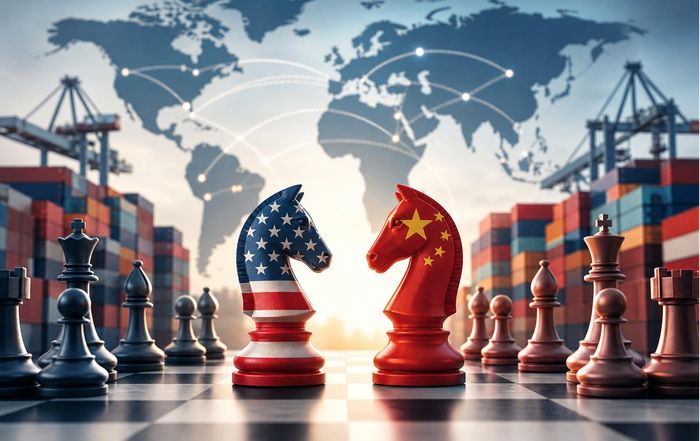
How Trade Disputes Shape Business Strategy in 2026
The New Strategic Reality of Trade Conflict
By mid-2026, trade disputes have moved from being episodic geopolitical events to a structural feature of the global economy, forcing executives, investors, and policymakers to rethink long-held assumptions about globalization, supply chains, and capital allocation. For readers of FinancialDailys.com, whose decisions span finance, markets, investing, and corporate strategy, understanding how trade frictions reshape business behavior is no longer optional; it is central to risk management, competitive positioning, and long-term value creation.
The post-pandemic period, compounded by escalating tensions between major economies such as the United States and China, the European Union and various trading partners, and a growing wave of industrial policy from Washington to Brussels to Beijing, has created an environment in which tariffs, export controls, sanctions, and regulatory fragmentation now directly inform boardroom strategy. Businesses operating across the United States, Europe, and Asia, as well as emerging markets in Africa and South America, are recalibrating their exposure to geopolitical risk while trying to preserve access to growth markets and technological innovation. Against this backdrop, trade disputes are no longer treated merely as external shocks; they have become integral variables in corporate planning models, capital spending decisions, and cross-border dealmaking.
For professionals tracking developments across global markets and trade, the central question is how firms can protect profitability and shareholder value while navigating an increasingly contested international trading system, and how the lessons of the last decade can be translated into resilient and opportunity-seeking strategies for the years ahead.
From Globalization to "Risk-Managed" Trade
The era of relatively frictionless globalization that characterized the late 1990s and early 2000s has given way to a more fragmented and politically charged trade environment. Institutions such as the World Trade Organization (WTO), once seen as the bedrock of a rules-based order, have faced mounting strain as major economies resort to unilateral measures, retaliatory tariffs, and sector-specific export controls. Observers tracking dispute settlement cases and tariff actions can review the WTO's evolving role to appreciate how the legal framework has struggled to keep pace with geopolitical rivalry and technological competition.
The United States' use of tariffs under Section 232 and 301, the European Union's carbon border adjustment mechanisms, and China's responses through informal pressures and targeted restrictions have collectively signaled to multinational corporations that political risk is now embedded in trade flows. Reports from organizations such as the Organisation for Economic Co-operation and Development (OECD), which regularly analyzes trade and investment trends, highlight how supply chains have become more regionalized and how foreign direct investment patterns have shifted in response to these tensions. Executives seeking to understand these macro trends often turn to resources that explore structural changes in global trade and investment.
In this environment, the previous optimization logic-minimizing costs through offshoring and just-in-time production-has been supplanted by a more nuanced calculus that balances efficiency with resilience, political predictability, and regulatory alignment. This rebalancing is visible in corporate disclosures, earnings calls, and investor presentations, where terms such as "nearshoring," "friend-shoring," and "dual sourcing" now appear alongside more traditional metrics of cost and margin.
Strategic Supply Chain Reconfiguration
One of the most visible ways in which trade disputes shape business strategy is through supply chain redesign. From automotive and electronics to pharmaceuticals and consumer goods, firms have been forced to reconsider the geographic concentration of suppliers and manufacturing facilities in light of tariffs, export bans, and logistical disruptions.
In North America and Europe, companies have accelerated moves to diversify away from single-country dependencies, particularly in sectors exposed to US-China tensions. The semiconductor industry provides a clear illustration, with TSMC, Intel, and Samsung Electronics adjusting investment plans in response to export controls on advanced chips and manufacturing equipment. Policy initiatives such as the US CHIPS and Science Act and the EU Chips Act have amplified these shifts by offering subsidies and tax incentives to localize production. Analysts tracking these trends often consult specialized industry data and policy analysis from sources such as the Semiconductor Industry Association to gauge the scale and strategic implications of new capacity investments.
For businesses covered by FinancialDailys' technology and manufacturing readers, the strategic question is no longer whether to diversify supply chains, but how quickly and at what cost. Relocating or duplicating production in countries like Mexico, Vietnam, India, or within the European Union involves substantial capital expenditure, complex regulatory navigation, and new labor market considerations. Yet the alternative-remaining heavily exposed to a single jurisdiction vulnerable to tariffs or export controls-poses increasingly unacceptable operational and reputational risks.
Supply chain finance has also evolved in response to trade disputes. Banks and trade finance providers, including large global institutions such as HSBC, JPMorgan Chase, and BNP Paribas, have refined their risk models to account for geopolitical exposure, sanctions regimes, and regulatory divergence. Businesses seeking to understand these dynamics can review guidance on trade finance and risk management from bodies such as the Bank for International Settlements, which outline how financial institutions price and manage cross-border trade risk.
Tariffs, Margins, and Pricing Strategy
Tariffs remain one of the most direct instruments through which trade disputes affect corporate performance. When governments impose import or export duties, firms must make rapid decisions about whether to absorb the additional costs, pass them on to customers, reengineer products, or reconfigure sourcing arrangements. These decisions have immediate implications for margins, market share, and brand positioning, particularly in price-sensitive segments.
Data from agencies such as the US International Trade Commission and the European Commission's Directorate-General for Trade, which publish detailed tariff and trade statistics, reveal how industries such as steel, aluminum, agriculture, and consumer electronics have experienced sharp cost fluctuations following tariff rounds. Executives and analysts frequently consult official tariff databases and trade statistics to anticipate cost structures and plan pricing strategies in advance of policy changes.
On the ground, firms have employed a range of tactics to manage tariff exposure. Some have redesigned products to change their customs classification, thereby qualifying for lower duties. Others have adjusted their global shipping routes or conducted minimal processing in intermediate countries to leverage favorable trade agreements, while staying within legal and compliance boundaries. In many cases, businesses have used tariffs as an opportunity to reposition their brands, emphasizing quality, local content, or sustainability to justify higher prices to consumers in markets such as the United States, Germany, and Japan.
For investors and corporate leaders following consumer and retail trends, the interplay between tariffs, inflation, and consumer behavior has become a critical area of analysis, particularly as central banks in the United States, the United Kingdom, and the euro area continue to monitor imported inflation pressures when setting interest rates.
Regulatory Fragmentation and Compliance Strategy
Beyond tariffs and quotas, trade disputes have accelerated a broader trend toward regulatory fragmentation, in which data protection rules, product safety standards, environmental requirements, and security-related controls differ sharply across jurisdictions. Companies with global footprints must now design compliance architectures that can withstand this complexity while avoiding costly enforcement actions or reputational damage.
The rise of data localization laws, digital services taxes, and divergent privacy regimes-such as the EU's General Data Protection Regulation (GDPR) and evolving frameworks in the United States and Asia-has forced technology and digital services companies to rethink how they store data, design cloud infrastructure, and structure cross-border data flows. Technology and financial services executives regularly review regulatory guidance and enforcement trends from European and national data protection authorities to ensure that their data governance models remain compliant across markets.
In parallel, export controls on dual-use technologies, advanced semiconductors, and critical software have placed new compliance burdens on firms operating in sectors such as aerospace, telecommunications, and artificial intelligence. Agencies such as the US Bureau of Industry and Security and their counterparts in Europe and Asia have expanded control lists and tightened licensing requirements, leading companies to invest heavily in trade compliance teams, internal training, and specialized software. Many organizations now treat trade compliance as a board-level risk, integrating it into enterprise risk management frameworks alongside cybersecurity, climate risk, and financial controls.
For readers of FinancialDailys' banking and finance coverage, this fragmentation has important implications for cross-border capital flows, payments, and regulatory reporting, as institutions must align their operations with a patchwork of anti-money laundering, sanctions, and data-sharing rules that increasingly reflect geopolitical tensions.
Strategic Capital Allocation and Investment Decisions
Trade disputes influence not only operational decisions but also long-term capital allocation. Multinational companies now factor geopolitical risk into decisions about where to build factories, establish research and development centers, and acquire local partners. Investors, in turn, price these risks into valuations, discount rates, and portfolio construction.
Sovereign risk assessments, such as those published by the International Monetary Fund (IMF) and World Bank, provide macro-level context on how trade tensions affect growth, current account balances, and investment climates in key markets. Corporate strategists and investors often examine IMF country reports and global outlooks to understand how trade disputes might alter the trajectory of economies such as China, Germany, or Brazil, and how those shifts could impact demand, supply chains, and regulatory environments.
In practice, this has led to a more cautious approach to greenfield investment in jurisdictions perceived as high-risk from a sanctions or export control perspective, while boosting interest in locations considered geopolitically aligned or neutral, such as parts of Southeast Asia, Eastern Europe, and the Gulf. It has also accelerated the use of joint ventures and minority stakes as flexible entry strategies that can be adjusted if trade relations deteriorate.
For investors and corporate finance professionals following capital markets and equity valuations, the result is a greater dispersion of valuations across sectors and regions, with premiums often attached to companies that demonstrate robust risk management, diversified revenue streams, and credible plans for navigating geopolitical uncertainty.
Innovation, Technology Controls, and Strategic Autonomy
Technology has become a central battleground in contemporary trade disputes, with governments seeking to protect or advance their national champions in areas such as 5G, cloud computing, artificial intelligence, and clean energy technologies. Export controls on advanced chips, restrictions on foreign investment in sensitive sectors, and subsidies for domestic technology ecosystems are all manifestations of this strategic competition.
Companies in the United States, Europe, China, South Korea, Japan, and Singapore are increasingly required to align their innovation strategies with national or regional industrial policies. For instance, European firms in sectors such as batteries, hydrogen, and renewable energy must navigate the European Green Deal and associated funding mechanisms, while US companies may access support through initiatives like the Inflation Reduction Act and related programs. Executives seeking to learn more about sustainable industrial policy and green technology investment often turn to the International Energy Agency (IEA) and other specialized bodies for data and scenario analysis.
In China, policies aimed at achieving greater "self-reliance" in key technologies have reshaped the competitive landscape for both domestic and foreign firms, influencing partnership models, intellectual property strategies, and market access conditions. Meanwhile, governments across Asia, including South Korea, Japan, and India, have launched their own industrial strategies to attract investment and move up the value chain.
For businesses and investors engaged with technology and innovation coverage on FinancialDailys, the strategic imperative is to anticipate how technology-related trade disputes may evolve, particularly in frontier areas such as quantum computing, advanced materials, and defense-related applications, and to design innovation portfolios that can withstand shifts in regulatory and geopolitical priorities.
Labor, Talent, and Cross-Border Mobility
Trade disputes also have a significant, if sometimes less visible, impact on labor markets and talent strategies. Restrictions on cross-border investment, tighter scrutiny of foreign workers in sensitive sectors, and changing immigration policies can complicate efforts to deploy global teams, attract specialized talent, and manage international assignments.
Professional services firms, technology companies, and manufacturers with global R&D networks must now plan for potential disruptions to visa regimes, security clearances, and work authorization rules, particularly in countries where national security concerns intersect with trade policy. Resources from organizations such as the International Labour Organization (ILO) and the World Economic Forum (WEF), which analyze global labor trends and skills mobility, provide context on how geopolitical tensions influence workforce planning and talent competition.
For readers focused on careers and workforce strategy, trade disputes underscore the importance of building locally resilient teams, investing in upskilling and reskilling in key markets, and developing leadership with cross-cultural and geopolitical fluency. Firms that can maintain talent pipelines across the United States, Europe, and Asia despite policy volatility will be better positioned to sustain innovation and operational excellence.
ESG, Sustainability, and Trade-Driven Reputation Risk
Environmental, social, and governance (ESG) considerations increasingly intersect with trade disputes, particularly in relation to supply chain transparency, human rights, and climate policy. Regulations such as the EU's due diligence rules on deforestation and human rights, as well as emerging standards in the United States and other jurisdictions, require companies to trace their supply chains and demonstrate that inputs are not associated with forced labor, environmental degradation, or other abuses.
Businesses that source from regions affected by sanctions, conflict, or environmental controversies must now integrate ESG risk assessments into their trade and procurement strategies. Organizations like the United Nations Global Compact and OECD provide frameworks and tools that help companies learn more about sustainable business practices and align their operations with international norms.
For the FinancialDailys.com audience, which increasingly incorporates sustainability metrics into investment and corporate decision-making, this convergence of trade and ESG underscores the need for integrated reporting, transparent communication with stakeholders, and robust governance structures. Coverage of sustainability and responsible investing has therefore become essential for understanding not only regulatory compliance but also long-term reputational resilience.
Strategic Responses Across Regions and Sectors
The strategic responses to trade disputes differ markedly across regions and sectors, reflecting variations in industrial structure, political priorities, and market dynamics. In the United States, many corporations have aligned with a broader policy shift toward "de-risking" rather than full decoupling from China, seeking to maintain access to its vast consumer market while reducing dependence on Chinese manufacturing for critical components. In Europe, firms must navigate a complex balance between economic ties to China, energy security concerns, and alignment with US security and technology policies.
In the Asia-Pacific region, economies such as Vietnam, Malaysia, Thailand, and India have positioned themselves as alternative manufacturing hubs, benefiting from supply chain diversification and new investment flows. Meanwhile, countries like Mexico and Canada have leveraged regional trade agreements such as the US-Mexico-Canada Agreement (USMCA) to attract reshoring and nearshoring opportunities from US and European firms. Businesses and investors assessing these shifts often consult regional economic and trade analysis to understand how local policy frameworks and infrastructure investments influence competitiveness.
Sectorally, industries such as automotive, electronics, pharmaceuticals, and renewable energy have been at the forefront of strategic adaptation. Automotive manufacturers have restructured their production footprints to comply with rules of origin requirements in trade agreements and to mitigate tariffs, while also preparing for potential divergence in electric vehicle standards and subsidies across major markets. Pharmaceutical and healthcare companies have diversified sourcing of active pharmaceutical ingredients and medical supplies to reduce vulnerability to export bans and logistical disruptions, particularly in times of crisis.
For readers of FinancialDailys' business and industry coverage, these sector-specific responses demonstrate how trade disputes can catalyze structural change, creating both winners and losers depending on how effectively firms anticipate and respond to policy shifts.
Implications for Investors and Capital Markets
Trade disputes exert a powerful influence on capital markets, shaping equity valuations, bond spreads, currency movements, and commodity prices. Investors who follow global markets and investing insights must interpret trade developments not only as political events but as fundamental drivers of earnings, cash flows, and risk premia.
When tariffs or export controls are announced, sectoral rotations often occur, with investors favoring domestically oriented companies or those with diversified supply chains over firms heavily exposed to disputed trade routes or sanctioned markets. Similarly, currencies of export-dependent economies may weaken in response to trade tensions, affecting the cost of capital for local firms and the returns of international investors.
Institutions such as the Bank of England, European Central Bank, and Federal Reserve regularly analyze how trade disputes influence inflation, growth, and financial stability, providing valuable context for market participants. Investors can review central bank research and policy communications to understand how trade tensions factor into monetary policy decisions, which in turn affect discount rates, asset valuations, and portfolio strategy.
Over the medium term, companies that demonstrate credible strategies for managing trade risk-through diversification, strong compliance, and transparent communication-tend to command higher valuation multiples and enjoy more stable access to capital, reinforcing the strategic importance of proactive trade risk management for corporate leaders.
The Role of Data, Scenario Planning, and Governance
In a world where trade disputes can escalate quickly and unpredictably, robust data, scenario planning, and governance structures are critical to effective strategy. Leading organizations now integrate trade-related indicators into their risk dashboards, monitor policy developments in real time, and conduct regular scenario exercises that consider outcomes ranging from targeted tariffs to comprehensive sanctions or export bans.
Boards and executive committees increasingly demand cross-functional input from legal, compliance, finance, operations, and government affairs teams to ensure that trade risk is understood holistically. External advisors, including law firms, consulting companies, and specialized risk intelligence providers, support this process by offering insights into political dynamics, regulatory trends, and enforcement patterns. Businesses seeking to strengthen their governance frameworks often draw on corporate governance and risk management guidance from academic and policy institutions.
For the FinancialDailys.com community, the capacity to interpret trade disputes through a data-driven and governance-focused lens is becoming a defining attribute of high-performing organizations and investment teams. Those who can connect geopolitical developments to financial outcomes, operational realities, and long-term strategic positioning will be better equipped to navigate the uncertainties of the coming decade.
Outlook: From Reactive to Strategic Engagement with Trade Policy
As of 2026, trade disputes are likely to remain a persistent feature of the global economic landscape, reflecting deeper shifts in power, technology, and values among major economies. Rather than treating trade tensions as episodic shocks, leading businesses and investors are moving toward a more strategic engagement with trade policy, recognizing that their own decisions can influence, and be influenced by, the evolving architecture of globalization.
This shift requires an integrated perspective that connects trade policy with corporate strategy, financial planning, ESG commitments, and stakeholder expectations across the United States, Europe, Asia, and beyond. It demands that organizations build internal expertise, cultivate external partnerships, and maintain the agility to adjust course as new disputes emerge or existing ones are resolved.
For readers of FinancialDailys.com, staying ahead of these developments means continuously engaging with in-depth coverage across finance and markets, the global economy, world affairs, and trade and sustainability, while drawing on trusted external resources such as the WTO, IMF, OECD, World Bank, and leading industry bodies. In doing so, decision-makers can transform trade disputes from purely defensive challenges into catalysts for strategic renewal, innovation, and long-term value creation in an increasingly contested global marketplace.
