
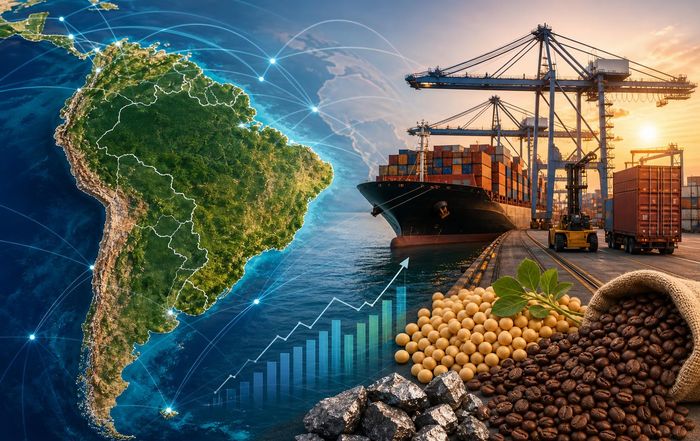
South America's Trade Outlook and Market Trends in 2026
South America enters 2026 at an inflection point in its trade and market trajectory, navigating a world economy marked by slower global growth, persistent geopolitical realignments, and accelerating technological change. For readers of Financialdailys.com, the region's evolving trade patterns, capital flows, and sector opportunities are no longer a peripheral story but an increasingly central component of global portfolio and corporate strategy. As multinational firms reassess supply chains, and investors search for diversification beyond the United States, Europe, and East Asia, South America's combination of commodities, demographics, and emerging innovation hubs is reshaping its role in the world economy, even as structural weaknesses and policy volatility continue to weigh on its long-term potential.
A Region Repositioning in the Global Trade System
South America's trade outlook in 2026 is defined by three overlapping dynamics: the reconfiguration of global value chains, the intensifying strategic competition between major powers, and the region's own efforts at deeper economic integration. The global shift toward "friend-shoring" and "near-shoring," highlighted repeatedly by institutions such as the International Monetary Fund, is pushing multinational manufacturers and service providers to diversify away from overconcentrated supply chains. As companies reassess their exposure to single-country risk, several South American economies are emerging as alternative or complementary production and sourcing bases, particularly in critical minerals, agribusiness, and selected manufacturing segments. Learn more about how global value chains are evolving through the IMF's trade research.
At the same time, the region is being courted by multiple global powers seeking secure access to energy, food, and minerals, and this competition is subtly reshaping trade patterns. China has consolidated itself as a leading trading partner for Brazil, Chile, Peru, and Argentina, while the United States and the European Union have renewed efforts to deepen commercial and regulatory ties, including the long-discussed EU-Mercosur agreement. For businesses and investors tracking global market dynamics, this overlapping engagement creates both opportunity and complexity, particularly in sectors exposed to export controls, sanctions regimes, and environmental standards.
Regional integration efforts, long hampered by political fragmentation and cyclical crises, are also entering a tentative new phase. The Southern Common Market (Mercosur) has revived discussions on external trade agreements, while the Pacific Alliance, linking Chile, Colombia, Mexico, and Peru, continues to promote trade facilitation and capital market integration. The World Trade Organization provides a useful lens on these developments and their alignment with multilateral rules; readers can explore current trade policy reviews to understand how South American economies are adjusting their frameworks.
Macroeconomic Backdrop: Stabilization with Fragilities
The trade outlook cannot be separated from the macroeconomic context in which South American economies operate. Following the inflationary spike of the early 2020s and the subsequent tightening of monetary policy, several central banks in the region were among the first globally to raise interest rates, and then among the earliest to begin cautiously easing. By 2026, inflation in major economies such as Brazil, Chile, Colombia, and Peru has generally moderated, though it remains above target in some cases and vulnerable to commodity price swings and currency depreciation. For a detailed view of inflation and monetary policy trends in Latin America, readers can review the Bank for International Settlements analysis and regional monetary policy reports.
Growth, however, remains uneven. Brazil, the region's largest economy, shows moderate expansion driven by services, agribusiness, and a nascent energy transition, while Argentina continues to struggle with debt, inflation, and recurrent macroeconomic stress despite ongoing negotiations with the IMF and domestic reform efforts. Chile and Peru, traditionally seen as more stable, face their own political and social pressures, which weigh on investment sentiment. These dynamics are closely monitored by credit rating agencies such as S&P Global Ratings and Moody's, whose sovereign assessments influence capital costs and investor appetite. Learn more about sovereign risk factors through S&P's global ratings insights.
For readers of Financialdailys.com concerned with regional economic trends, the implication is clear: South America in 2026 offers a mix of cyclical stabilization and structural fragility. External accounts are generally supported by high-value commodity exports, but fiscal space is constrained, public debt levels are elevated in several countries, and social demands for improved services and inequality reduction remain intense. These pressures shape trade policy choices, industrial strategies, and the regulatory environment for foreign investors.
Commodity Powerhouse: Energy, Metals, and Food
South America's trade profile continues to be dominated by commodities, but the nature of demand is evolving, especially in the context of the global energy transition and food security concerns. The region's comparative advantages in energy, critical minerals, and agriculture are increasingly strategic, attracting sustained interest from governments, multinational corporations, and institutional investors.
In energy, Brazil's pre-salt offshore fields, Guyana's rapidly expanding oil production, and Argentina's Vaca Muerta shale formation are central to the region's export earnings and fiscal revenues. At the same time, South America is well positioned to become a major player in renewable energy, with abundant hydro, wind, and solar resources. The International Energy Agency has repeatedly underscored the region's potential role in green hydrogen, biofuels, and low-carbon power exports; readers can explore IEA energy transition outlooks. This dual identity as both a fossil-fuel exporter and a renewable energy leader creates a complex policy landscape, as governments balance short-term revenue needs with long-term decarbonization commitments.
Critical minerals are another defining feature of South America's trade outlook. Chile, Argentina, and Bolivia sit atop the "lithium triangle," while Brazil and Peru are significant producers of copper, nickel, and iron ore, all essential for electric vehicles, batteries, and renewable infrastructure. The World Bank has emphasized that mineral demand associated with clean energy technologies could rise substantially in the coming decades, positioning South America as a key supplier in a decarbonizing world. Learn more about the role of critical minerals in the energy transition.
Agriculture and food exports remain a core pillar. Brazil is a leading exporter of soybeans, beef, poultry, and sugar, while Argentina, Paraguay, and Uruguay are important suppliers of grains and meat. The region's ability to expand production while managing environmental constraints, particularly deforestation and water use, is under close scrutiny by regulators, investors, and civil society. The Food and Agriculture Organization of the United Nations provides valuable data and analysis on productivity, climate impacts, and trade flows; readers can review FAO's regional perspectives. For companies and investors following global food markets and consumer trends, South America's agribusiness sector represents both an opportunity and a reputational risk, depending on how sustainability and social issues are managed.
Manufacturing, Services, and the Quest for Diversification
While commodities dominate exports, long-term competitiveness requires diversification into higher-value manufacturing and services. South America's track record in this area is mixed, but 2026 shows some promising pockets of progress. Automotive manufacturing, particularly in Brazil and Argentina, continues to integrate into regional and global value chains, with a growing emphasis on electric and hybrid vehicles, though cost structures and regulatory complexity remain challenges. The Organisation for Economic Co-operation and Development (OECD) has highlighted the need for productivity-enhancing reforms to support industrial upgrading; readers can explore OECD's Latin America economic surveys.
Services trade is emerging as a more dynamic frontier. Business process outsourcing, software development, and fintech services are expanding in countries such as Brazil, Colombia, Chile, and Uruguay, supported by improving digital infrastructure and a relatively young, tech-savvy workforce. As global companies look to diversify their service delivery locations beyond traditional hubs in India and Eastern Europe, South American cities are competing to attract investment and talent. For those tracking technology and digital business trends, the region's rising profile in software, gaming, and cloud services is an important counterweight to its commodity-heavy image.
Tourism, another key service export, is still recovering in some markets from the disruptions earlier in the decade, but the medium-term potential of eco-tourism, cultural tourism, and business travel remains significant, especially in countries such as Brazil, Colombia, Peru, and Chile. The World Tourism Organization (UNWTO) provides insights on how changing travel patterns and sustainability concerns are reshaping tourism flows; readers can review UNWTO's regional reports. For investors in hospitality, airlines, and related sectors, understanding these shifts is critical for capital allocation and risk assessment.
Trade Agreements, Market Access, and Regulatory Shifts
Trade policy in South America has long been characterized by a complex mix of regional blocs, bilateral agreements, and unilateral measures. In 2026, this landscape is still evolving, with implications for exporters, importers, and cross-border investors. The EU-Mercosur trade agreement, negotiated over many years, remains a focal point of debate, particularly around environmental standards, agricultural market access, and industrial tariffs. While progress has been uneven, the eventual outcome will shape trade flows between major South American economies and the European Union, affecting sectors from automotive and machinery to beef and dairy. The European Commission's trade portal is a valuable resource for monitoring the status and content of such agreements; learn more about EU trade policy and regional negotiations.
Beyond Mercosur, the Pacific Alliance continues to advance initiatives on trade facilitation, regulatory convergence, and capital market integration. These efforts complement bilateral agreements that South American countries maintain with the United States, the European Union, China, and other partners. The World Bank's Doing Business legacy indicators, while no longer updated, and newer frameworks on business climate and logistics performance still help investors gauge the practical implications of customs procedures, contract enforcement, and regulatory transparency. Readers of Financialdailys.com focused on international trade and market access will recognize that the real challenge often lies not only in tariff schedules but in non-tariff barriers, standards compliance, and administrative capacity.
Regulatory shifts in areas such as data protection, financial services, and competition policy are also increasingly relevant for cross-border business models. Countries including Brazil and Chile have implemented or strengthened data protection laws aligned to some degree with international norms, while competition authorities are more actively scrutinizing mergers and anti-competitive practices, especially in digital markets and network industries. The International Finance Corporation and other development institutions offer guidance on best practices for regulatory frameworks that balance innovation with consumer protection; readers can explore IFC's investment climate resources.
Capital Markets, Banking, and Investment Flows
South America's capital markets in 2026 reflect both the depth of local financial ecosystems and the volatility associated with global risk sentiment. Equity markets in Brazil, Chile, Colombia, and Peru continue to serve as key funding channels for large corporates, though liquidity and sectoral concentration remain concerns. Fixed-income markets, including sovereign and corporate bonds, attract institutional investors seeking yield, but are sensitive to shifts in global interest rates and risk appetite. For a detailed assessment of regional equity and debt opportunities, investors closely follow benchmark indices, credit spreads, and currency dynamics.
The banking sector plays a central role in financial intermediation, with large domestic groups and foreign subsidiaries dominating in most markets. Financial stability indicators have generally improved since earlier crises, supported by stronger regulation and supervision, although asset quality and profitability are under pressure in some economies due to slower growth and legacy non-performing loans. The Bank for International Settlements and the Financial Stability Board provide comparative insights on regulatory standards and systemic risk; readers can review FSB's assessments on emerging market vulnerabilities.
Foreign direct investment (FDI) flows are increasingly concentrated in sectors aligned with long-term global trends: renewable energy, digital infrastructure, logistics, and advanced agribusiness. The United Nations Conference on Trade and Development (UNCTAD) tracks these flows and highlights how policy frameworks and investment promotion strategies influence investor decisions; learn more about FDI trends in developing regions. For businesses and investors reading Financialdailys.com and considering cross-border investment strategies, understanding the interplay between macroeconomic stability, regulatory predictability, and sectoral prospects is essential.
Startups, Technology, and the Digital Trade Frontier
One of the most notable shifts in South America's economic narrative over the past decade has been the rise of technology startups and digital platforms, which have begun to reshape commerce, finance, and services across the region. Brazil, Colombia, Chile, and Mexico (though not in South America, still influential regionally) have nurtured ecosystems that produced fintech, e-commerce, and mobility champions with regional and, in some cases, global reach. While valuations have corrected from earlier exuberant levels, the underlying digitalization of payments, logistics, and retail continues to deepen.
Fintech remains a particularly dynamic segment, with startups and established players competing to expand financial inclusion, lower transaction costs, and provide alternative credit scoring models. The Bank for International Settlements and the World Bank have emphasized how digital financial services can support inclusive growth, provided that regulatory frameworks ensure consumer protection and systemic stability. Readers can learn more about the role of fintech in emerging markets. For entrepreneurs and investors following startup and innovation stories, South America's fintech wave offers both growth opportunities and regulatory challenges.
Digital trade more broadly is becoming a critical dimension of South America's integration into the global economy. Cross-border e-commerce, cloud computing, and digital services exports are expanding, but data localization rules, cybersecurity concerns, and divergent regulatory regimes can create friction. The World Economic Forum has highlighted the importance of interoperable digital frameworks and public-private collaboration to unlock the full potential of digital trade; readers can explore WEF's insights on digital economy governance. For South American economies, aligning digital regulations with global best practices while safeguarding national interests will be a defining policy task in the coming years.
Sustainability, ESG, and the Green Trade Imperative
Sustainability considerations have moved from the periphery to the core of trade and investment decisions, and South America is at the center of this shift due to its rich biodiversity, vast forests, and critical role in climate mitigation. International investors, development banks, and multinational corporations are increasingly applying environmental, social, and governance (ESG) criteria to their South American exposure, affecting everything from sovereign bond pricing to supply-chain sourcing decisions. For readers interested in sustainable finance and corporate responsibility, these trends are reshaping the region's competitive landscape.
Deforestation in the Amazon, land use in the Cerrado, and the social impact of mining projects are under particularly intense scrutiny. The United Nations Environment Programme (UNEP) and the Intergovernmental Panel on Climate Change (IPCC) have repeatedly underscored the global importance of South America's ecosystems for carbon sequestration and biodiversity; readers can review UNEP's climate and biodiversity reports. In response, several governments are tightening environmental regulations, while companies across agribusiness and mining are adopting more rigorous sustainability reporting and certification schemes to maintain market access, especially to Europe and North America.
At the same time, the global push for decarbonization is generating new opportunities in green trade. Renewable energy exports, green hydrogen projects, sustainable aviation fuels, and nature-based carbon credits are all areas where South America could leverage its natural advantages. International initiatives, including those supported by the World Bank, Inter-American Development Bank, and climate finance funds, are channeling capital into low-carbon infrastructure and sustainable land use. Learn more about sustainable business practices and climate finance. For businesses and investors aligned with ESG objectives and reading Financialdailys.com, these developments suggest that long-term value creation in South America will increasingly depend on aligning commercial strategies with environmental and social priorities.
Labor, Skills, and the Future of Work
The evolution of South America's trade and market trends is closely linked to its labor markets and human capital. Demographically, the region still benefits from a relatively young population compared with many advanced economies, but this advantage can only be realized if education, skills, and labor market institutions adapt to a more knowledge-intensive and digitalized economy. The International Labour Organization (ILO) has emphasized the need for upskilling, reskilling, and stronger social protection to navigate technological disruption; readers can explore ILO's regional labor market analysis.
In 2026, remote work, digital platforms, and the gig economy are increasingly common in major South American cities, especially in technology, creative industries, and professional services. However, informality remains high in many countries, limiting productivity and social security coverage. For employers and professionals following career and workforce trends, understanding local labor regulations, talent availability, and wage dynamics is essential when evaluating investment locations or partnership opportunities.
Migration patterns also influence labor markets and trade. Intra-regional migration, including flows from Venezuela and other countries facing economic distress, has reshaped labor supply and demand in host countries such as Colombia, Peru, and Brazil. This creates both challenges in terms of social integration and opportunities by expanding the available workforce and entrepreneurial base. For multinational companies and investors, the ability of governments to manage these dynamics effectively will affect social stability, consumer demand, and political risk.
Strategic Implications for Global Investors and Corporates
For the global business and investment community that turns to Financialdailys.com for insight on finance, business, and world markets, South America's trade outlook in 2026 presents a nuanced picture. The region offers exposure to structural themes that will define the next decade: the energy transition, food security, digitalization, and demographic change. At the same time, it carries elevated levels of policy, currency, and political risk compared with many advanced economies.
Investors constructing diversified portfolios may view South American assets as a source of uncorrelated returns, particularly in commodities, renewable energy, and selected consumer and financial sectors. However, they must incorporate robust risk management frameworks, including scenario analysis for commodity prices, stress testing for currency and interest-rate shocks, and careful assessment of governance standards. Corporates considering expansion or supply-chain diversification into South America need to evaluate not only cost and market size but also regulatory predictability, infrastructure quality, and ESG expectations from global stakeholders.
From the vantage point of Financialdailys.com, which serves readers across North America, Europe, Asia, and beyond, South America's evolving trade and market trends underscore a broader reality: global economic leadership is no longer confined to a narrow set of geographies. The region's choices on integration, reform, and sustainability will influence not only its own prosperity but also the resilience and inclusiveness of the global trading system. As trade flows realign, technologies diffuse, and capital seeks both yield and impact, South America in 2026 stands as a region of significant promise, contingent on its ability to harness its natural endowments, human capital, and institutional reforms into a more diversified and sustainable growth model.
For decision-makers monitoring these developments, continuing to engage with high-quality analysis, data, and on-the-ground perspectives will be essential. In that context, Financialdailys.com will remain focused on tracking South America's financial markets, policy shifts, and corporate strategies, ensuring that its global readership can translate the region's complex trade outlook into informed investment, risk management, and strategic decisions.
